Last updated November 17, 2026








Free written scope consultation - allowances, timeline, and change-order rules on paper before a single trade is scheduled
DIY vs Professional Home Remodeling: What’s Safe to Do Yourself
Here’s something most homeowners don’t know: in Nevada, you can legally pull a permit and rewire your own house. The work can be done to code, inspected, and signed off. But when you go to sell, an unpermitted panel upgrade or a bathroom remodel that never got a final inspection can stall closing, trigger a buyer’s repair demand, or cost you a re-inspection and remediation bill that dwarfs what you saved. The real DIY question isn’t “can I do this?” It’s “what does it cost me if I’m wrong?” This guide draws a hard line between the jobs where a mistake means a weekend re-do and the jobs where it means a four-figure fix, and it’s written from Sunrise Manor, where the desert climate and the local code office both shape the answer.
Styles & brands we work with
- Kitchen remodeling
- Bathroom remodeling
- Home additions & ADU
- Roofing
- Windows & doors
- Driveway & pavers
- Fence
Quick Answer
Painting, swapping hardware, and supervised demolition are safe DIY projects for most homeowners. Tile substrate prep, shower waterproofing, electrical panel work, and anything touching load-bearing walls are not. In Sunrise Manor, those mistakes stay hidden behind drywall and slab until they cause water damage, failed inspections, or a structural repair that costs 5 to 10 times what a professional would have charged to do it right the first time.
Table of Contents
- What Nevada’s Owner-Builder Rules Actually Allow
- The Jobs Where DIY Errors Stay Invisible Until They’re Catastrophic
- When Paying a Pro Is Cheaper Than DIY
- The Acceptable DIY Short List
- Permit Thresholds in Clark County: What Requires a Licensed Contractor
- What a Written Guarantee Covers That DIY Never Will
- Sunrise Manor-Specific Considerations
- Common Mistakes to Avoid
- When to Call a Professional
- Frequently Asked Questions
- The Bottom Line
What Nevada’s Owner-Builder Rules Actually Allow
Nevada allows a homeowner to act as their own “owner-builder” and pull permits for work on a property they own and occupy. That sounds like a green light for the whole house. It isn’t. The rules come with real limits, and Clark County’s building department enforces them.
Under Nevada owner-builder rules, you can typically pull permits for work on your primary residence, but the property cannot be sold or rented for a defined period without disclosure, and the exemption doesn’t apply to multi-family or rental properties. You are also personally responsible for meeting every code requirement, passing every inspection, and correcting anything the inspector flags. There’s no contractor’s license protecting you from your own work.
Where the line gets clearer is in the trade work. Clark County requires licensed contractors for gas line work, and most jurisdictions require a licensed electrician for panel replacements or new service installations even on owner-builder permits. If you’re planning a panel upgrade, a gas range hookup, or moving a load-bearing wall in your Sunrise Manor home, that work is not a self-pull.
Our technicians have up to 22 years of experience, and the single most common conversation we have with homeowners in Sunrise Manor is about work that was permitted but never inspected. An open permit from a previous owner can complicate a sale just as badly as no permit at all. Before you start any permitted project, verify that prior work on the property was closed out.
The Jobs Where DIY Errors Stay Invisible Until They’re Catastrophic
Some mistakes announce themselves. Paint drips, a crooked cabinet door, a tile that won’t stick. Others stay hidden for years and then fail all at once. In our experience, three categories of work fall into the second group, and every one of them shows up in Sunrise Manor homes.
- Tile substrate prep. Cement board substrate (the moisture-resistant layer behind your tile) has to be installed with the right fasteners, the joints taped and mortared, and the whole surface flat within a small tolerance. Skip a step and the tile cracks along the grout lines six months later, or worse, the thinset releases and tiles pop loose. It looks fine on install day and fails after the first temperature swing.
- Shower waterproofing. A shower pan has to slope correctly toward the drain, and the waterproofing membrane has to be continuous and correctly lapped. Get that wrong and water wicks into the wall cavity behind the tile. You won’t see it until the drywall on the other side of the wall is soft, or the ceiling below is stained. By then you’re replacing framing and drywall in addition to redoing the shower.
- Load-bearing wall framing. Removing a wall that carries load requires a proper header sized for the span, correctly rated and connected, with the load path transferred below. A wall that “looks like it’s just interior” can be structural. A sagging ceiling or a cracked wall two rooms over is the warning sign, and by then you’re into a structural repair, not a framing fix.
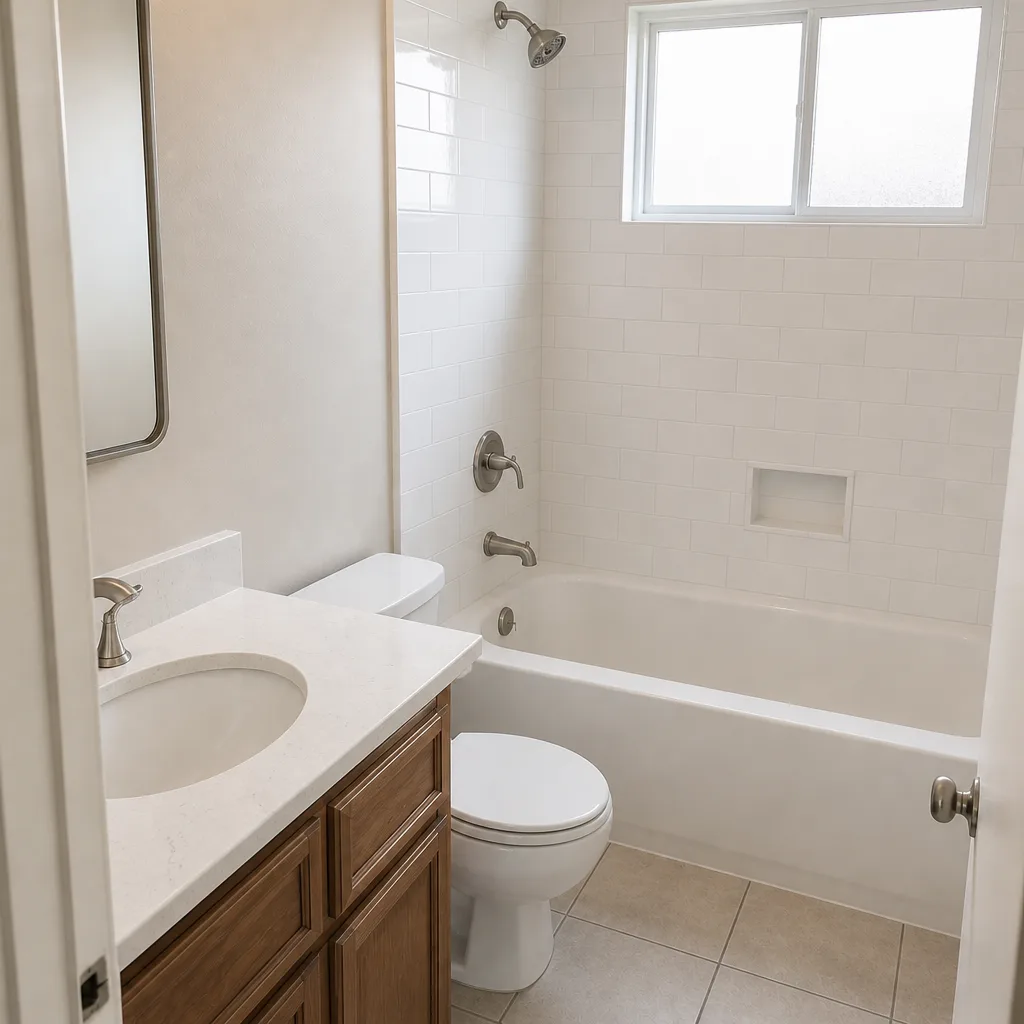
These are the jobs where a mistake costs $8,000 to $15,000 in remediation, not $500 in materials. For a wall removal or a full shower rebuild, the math favors a pro almost every time. If you’re planning a shower or full bath, see our Bathroom Remodeling in Sunrise Manor page for what the process actually involves.
When Paying a Pro Is Cheaper Than DIY
Homeowners usually compare a contractor’s bid to the price of materials at a box store. That comparison is incomplete. A contractor pays trade pricing on materials, owns the tools, and absorbs the cost of a re-do within the job. A homeowner pays retail on materials, rents or buys every tool, and pays 100 percent of any re-do out of pocket.
- Materials at retail vs. trade pricing. A mid-grade 10×10 bathroom tile job might run $1,800 to $3,200 in materials at retail. A contractor working with trade-supply relationships often lands closer to the lower end, and the gap widens on cabinets and countertops.
- Tool rental. A wet saw, tile snap cutter, mixing paddle, and ledger boards might cost $200 to $400 to rent for a weekend tile job, assuming the store has them when you need them. Add another $150 to $300 if you break a blade or return late.
- The re-do factor. If your first tile job fails and you redo it, you’re buying the tile twice, the thinset twice, and the rental twice. That’s the real cost of a DIY bathroom.
- Time. A tile shower is a two to three-day job for a crew and a three-weekend job for a first-timer. Count what those weekends are worth to you.
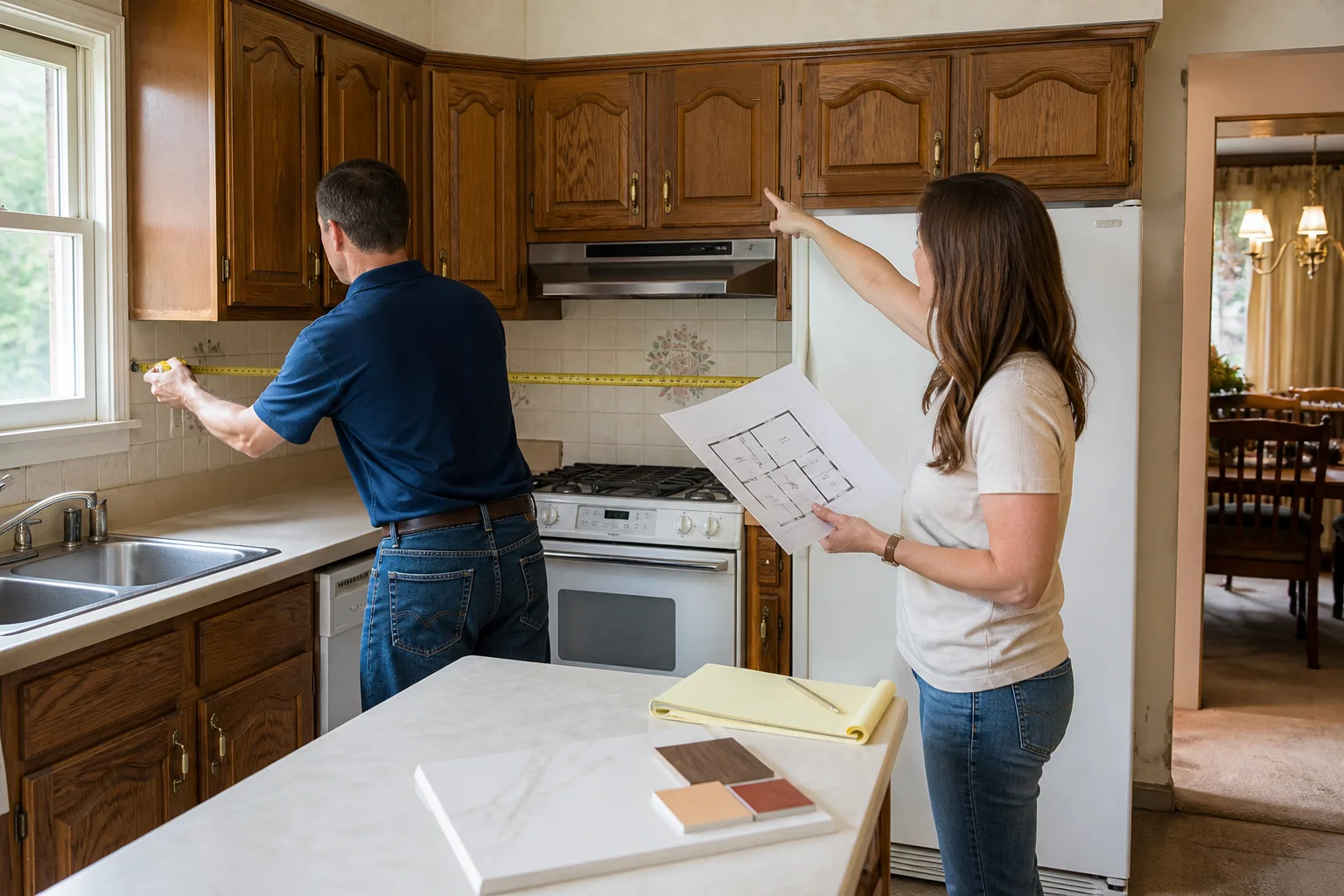
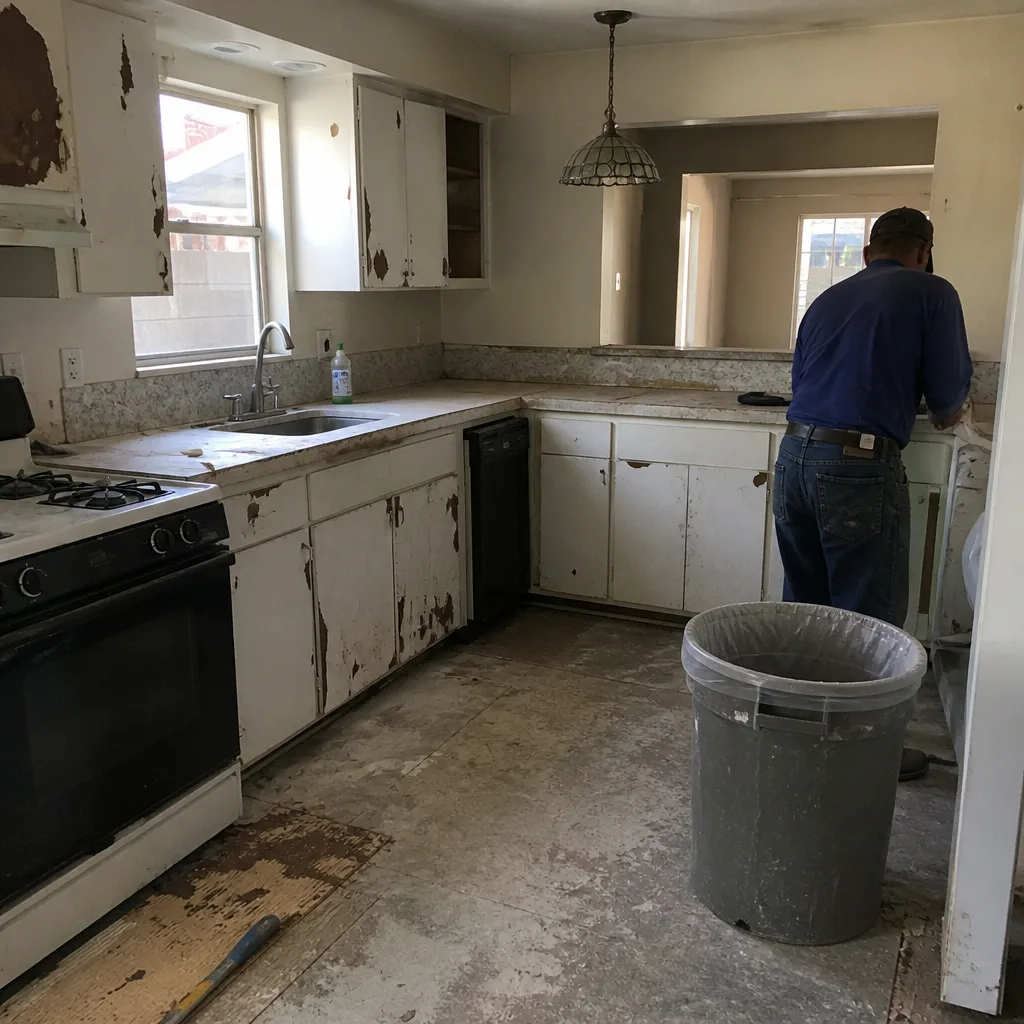
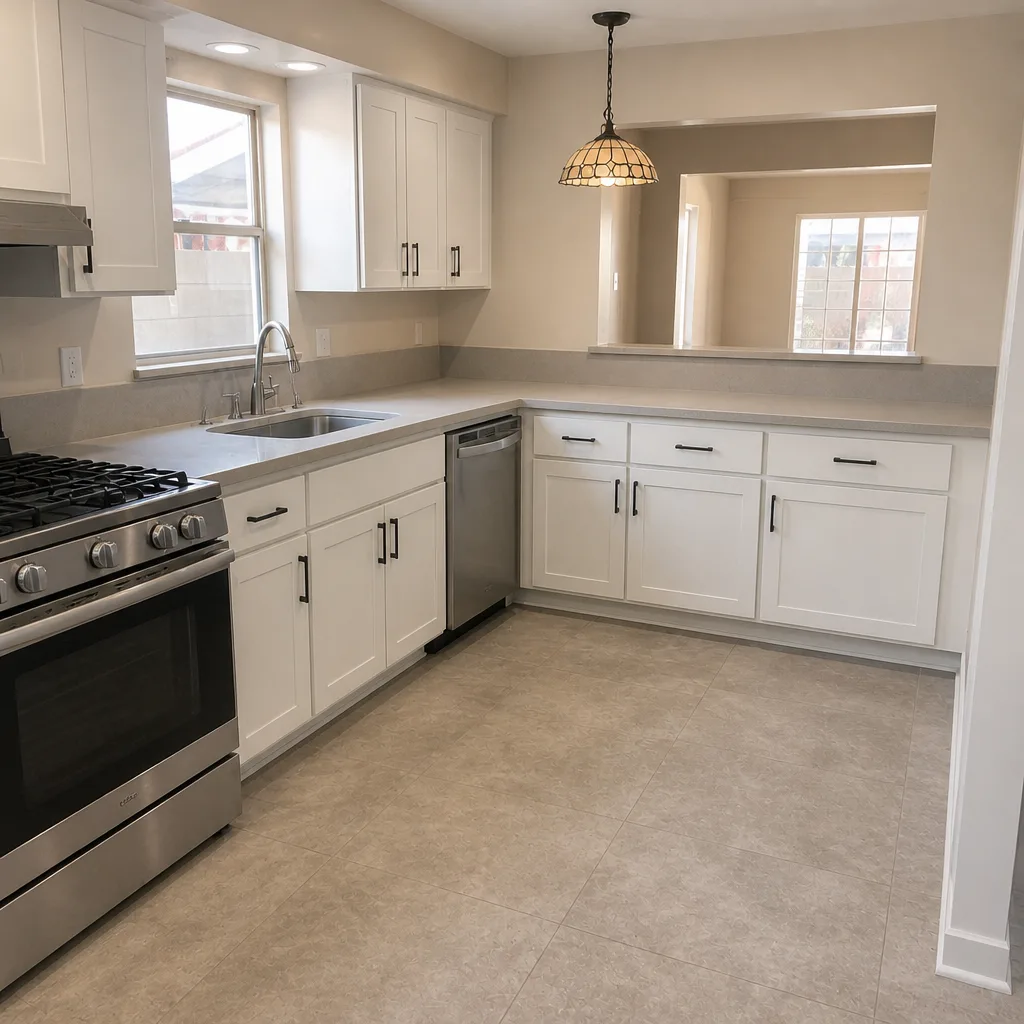
For a small tile backsplash, DIY can genuinely save money. For a full shower or a kitchen with cabinets and countertops, the math usually flips. If you’re weighing a kitchen project, our Kitchen Remodeling in Sunrise Manor page covers what’s driving the cost.
The Acceptable DIY Short List
Some work is genuinely worth doing yourself, and we’ll tell you so. Here’s the short list, with honest notes on where each one goes sideways.
- Interior painting. Low risk, high satisfaction. Goes sideways when the prep is rushed: skipping the sanding, painting over a patched wall without priming, or choosing a sheen that shows every roller mark. A primer coat and a good brush make the difference.
- Supervised demolition. Pulling cabinets, removing old flooring, taking out a non-structural partition. Goes sideways when you hit a live wire, cut a water line you didn’t know was there, or remove a wall that turns out to be load-bearing. Demo with a plan, a shutoff check, and a professional’s sign-off on which walls can go.
- Hardware and fixture swaps. Cabinet pulls, towel bars, a showerhead, a faucet swap on existing supply lines. Goes sideways when the shutoff valve is seized or the supply line is undersized. If we’re installing Kohler or Moen fixtures, we’re also checking the valve and the line behind them.
- Caulking and grout refresh. Low cost, real visual impact. Goes sideways when the caulk goes over wet or dirty substrate or the grout is applied over a shower that’s already leaking behind the tile.
Permit Thresholds in Clark County: What Requires a Licensed Contractor
Permit thresholds vary by jurisdiction, but a general rule applies in Clark County: structural, electrical service, plumbing alterations, and gas work require a permit, and the licensing requirement for certain trades is separate from the permit itself. Here’s how those lines typically fall.
- Structural changes (removing or adding walls, openings, an addition) require a permit and engineering where load-bearing walls are involved.
- Electrical panel replacements and new service installations generally require a licensed electrician; owner-builder permits for minor branch work may be allowed but are getting harder to obtain.
- Gas lines require a licensed contractor in Clark County, with no owner-builder self-pull for new gas work.
- Plumbing alterations (moving a drain, adding a fixture, rerouting supply lines) require a permit and typically a licensed plumber.
Where the answer gets murky is the in-between work: a tile shower in an existing footprint, cabinet replacement, countertop swap. Those often fall under a remodel permit or no permit at all, depending on scope. Knowing which category your project lands in is exactly what a general contractor does, and it’s why we walk every Sunrise Manor patient through the threshold before the first cabinet is pulled. If you need a professional read on the permit scope, our General Contractor in Sunrise Manor page covers what we pull and inspect.
What a Written Guarantee Covers That DIY Never Will
Here’s the part of the DIY math nobody prices in: recourse. If your tile job fails, you call yourself. If a contractor’s tile job fails inside the guarantee period, you call the contractor, and the contractor comes back.
At Penhallow Remodeling Sunrise Manor, every project carries the 365-Day Done Right Promise: if the work fails inside that window, we come back and fix it at no charge, backed in writing. That’s not a verbal assurance; it’s a written guarantee included with every job. A failed repair also gets a free second visit, no service call and no re-inspection fee.
The guarantee is one layer. The other is the product warranty behind it. When we install Cambria quartz, it carries its own lifetime warranty alongside ours. Kohler and Moen fixtures carry their own manufacturer coverage. Cabinetry from KraftMaid and Wellborn carries its own protection. A DIY install generally voids or fails to register those manufacturer warranties, which means the homeowner ends up with no warranty on the product and no guarantee on the labor. That single fact often changes the hiring-out math on a kitchen.
Sunrise Manor-Specific Considerations
Sunrise Manor’s climate asks specific things of a remodel. The desert swing between summer heat and winter overnight lows puts a real thermal load on tile, grout, and exterior assemblies. A shower that was waterproofed with the wrong membrane will often fail faster here than in a temperate climate because the wall cavity is hotter and drier on the inside and the temperature swing is wider.
Older homes in Sunrise Manor and the surrounding east valley often have the original supply lines, the original panel, or the original drain configuration. That matters for the DIY decision: a 1970s-era home with a galley kitchen may have a panel at or near capacity, which means a DIY kitchen remodel that adds a dishwasher circuit could trigger a panel upgrade. Those are the jobs where a general contractor’s pre-work inspection pays for itself.
Our technicians arrive background-checked and in uniform, and we do the walk-through before any price is written. It’s the same standard whether we’re doing a full kitchen or a single bathroom. You can see the full scope of what we handle on the Penhallow Remodeling Sunrise Manor home page.
Common Mistakes to Avoid
- Pulling an owner-builder permit without checking the sale restriction. Nevada’s owner-builder exemption carries a defined no-sale window. Skip that and you may find yourself unable to close on a sale until the timeline runs out.
- Trusting “it looks level” for tile. Flatness is a tolerance, not an eyeball test. A substrate that’s off by an eighth of an inch over four feet will telegraph into lippage and eventually into cracked grout.
- Waterproofing a shower after the cement board goes up. The membrane has to be continuous and correctly lapped. If it goes on after the board, you’re trusting a paint-on product to compensate for a buildup you didn’t measure.
- Removing a wall because it “seems” non-structural. In Sunrise Manor’s older homes, a partition that looks like a closet wall can carry ceiling load. A structural engineer or a general contractor can tell you, and one hour of consultation is cheaper than one month of remediation.
- Buying materials at retail for a full remodel. The box-store price is not the project price. On a mid-range kitchen, the gap between retail and trade pricing often covers a significant slice of the labor bid.
- Replacing a panel or moving a gas line without a licensed trade. This is a safety issue, not a permit technicality. Gas leaks and panel faults don’t warn you, and the consequences aren’t cosmetic. For anything beyond a fixture swap, hire the trade.
- Skipping the pre-work inspection on an older Sunrise Manor home. A panel at capacity, a galvanized line, or a failed shutoff turns a weekend project into a two-week project. A pre-work walk-through catches it before demo day.
When to Call a Professional
Call a professional when the work touches structure, gas, electrical service, plumbing alterations, or waterproofing, and when the project involves cabinetry, countertops, or tile that will sit on a substrate you haven’t verified. Also call when the home is older than 30 years and the panel, supply lines, or drain configuration haven’t been recently assessed. Load-bearing walls, panel replacements, and gas work carry a genuine safety risk, and those are jobs for a licensed trade without exception. The rest is a math question: if the cost of a re-do is more than the labor bid, hire it out. Penhallow Remodeling Sunrise Manor offers free estimates in Sunrise Manor with a written price before any work starts – call (844) 972-4834.
Frequently Asked Questions
In some cases, yes. Nevada allows an owner-builder to pull permits for certain work on a primary residence, but panel replacements and new service installs generally require a licensed electrician, and even legal owner-builder work must pass inspection. An unpermitted panel upgrade can delay or kill a sale down the line. Call (844) 972-4834 if you want a second opinion on what scope is safe to self-perform; estimates are free.
Failed shower waterproofing. A shower pan that slopes wrong or a membrane that’s installed incorrectly lets water wick into the wall cavity behind the tile, and the visible failure often shows up in the adjacent room or the ceiling below before it shows in the shower itself. Remediation runs into the thousands once framing and drywall are involved. Call (844) 972-4834 for a written quote on a shower rebuild.
Often yes, and it can save real money, provided you have a clear scope, a plan for which walls are safe to remove, and confirmation that the utilities are shut off at the source. We do this routinely as part of a remodel, with a pre-demo walk-through that marks the walls that can come out. Call (844) 972-4834 to schedule a free estimate and the walk-through.
Our 365-Day Done Right Promise covers the work we perform, backed in writing on every project. Work you do yourself is your own to guarantee. That’s one reason we’re careful about scope on hybrid projects. Call (844) 972-4834 to talk through what stays in your hands and what we take on.
Often yes, depending on scope and whether any plumbing, electrical, or wall changes are involved. A straight cabinet or countertop swap in the same footprint may not require a permit, but a scope that reconfigures the kitchen typically does. The safest move is to confirm with the building department or a general contractor before work starts. Call (844) 972-4834 for a free estimate that includes the permit scope in writing.
Not always. A small kitchen backsplash is one of the few tiling jobs where a careful DIYer can genuinely save money, provided the substrate is flat and you’re ready to accept a learning curve on cuts. For a full shower or a large floor, the re-do risk usually tips the math toward hiring. Call (844) 972-4834 for a written quote so you can compare.
The Bottom Line
The DIY decision is really a documented-risk decision. Paint, supervised demolition, and hardware swaps are worth doing yourself, provided you accept the learning curve. Tile substrate, shower waterproofing, load-bearing walls, and any gas or electrical service work are for a licensed trade, because the failure mode is invisible, the remediation runs into the thousands, and the recourse is yourself. In Sunrise Manor, the added wrinkle is an older housing stock and a desert climate that punishes bad waterproofing faster than most. When the math goes either way, get a written number. The number is free, and it makes the decision a math question instead of a guess.
Penhallow Remodeling Sunrise Manor puts the price and the guarantee in writing before a single cabinet is pulled or tile is set. Every project gets a written price up front, a real arrival window, and our 365-Day Done Right Promise to make it right. A live person answers the phone 24/7, and every technician arrives background-checked and in uniform. Call (844) 972-4834 to schedule your free estimate in Sunrise Manor. There’s no pressure to book the job – we’ll give you the number, you decide.
Written by the team at Penhallow Remodeling Sunrise Manor.
See the difference
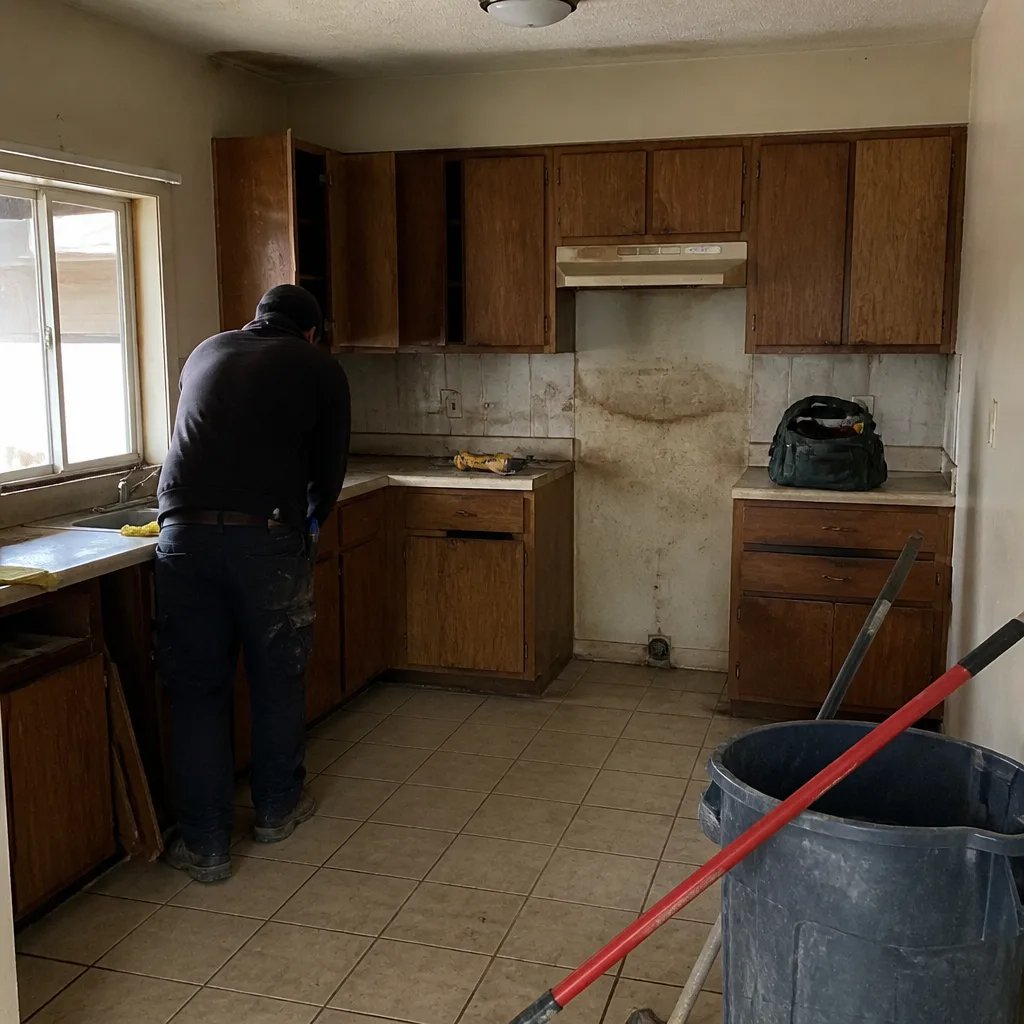 Before
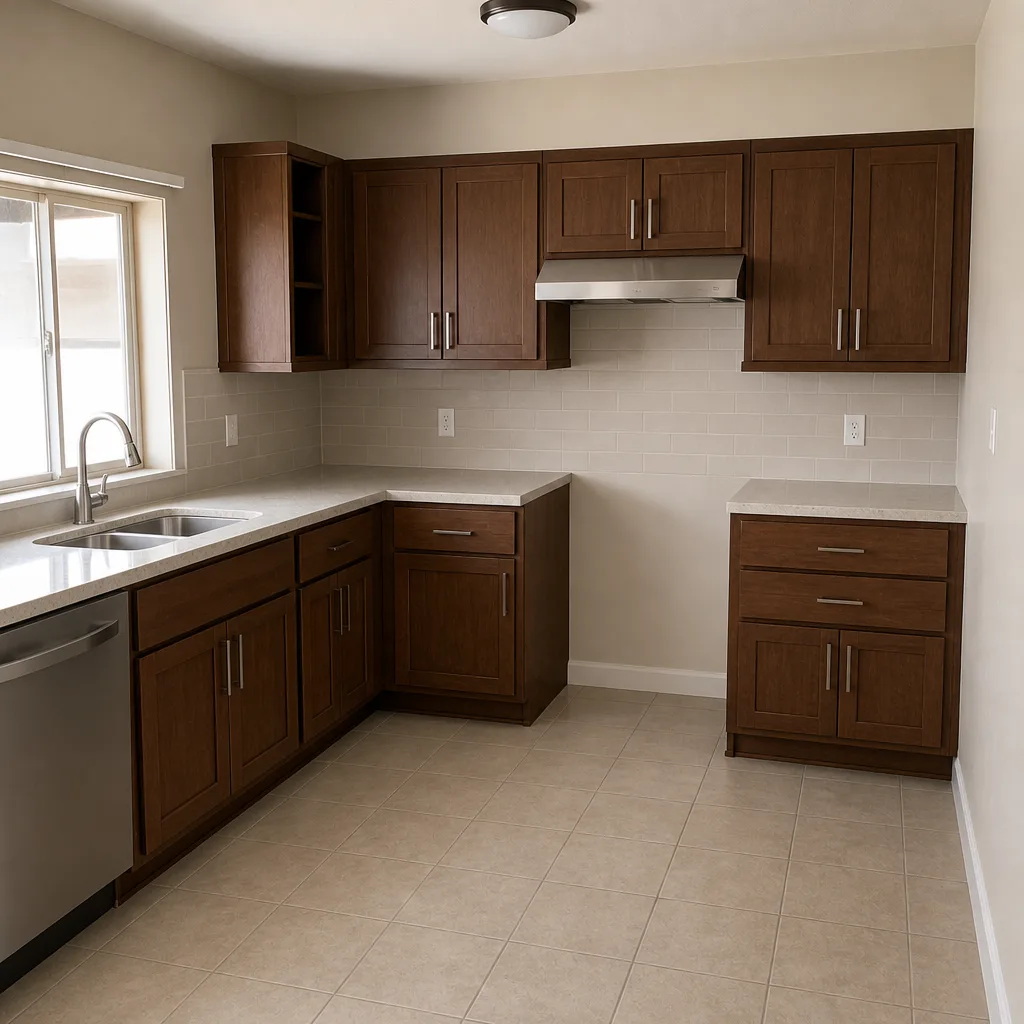 After
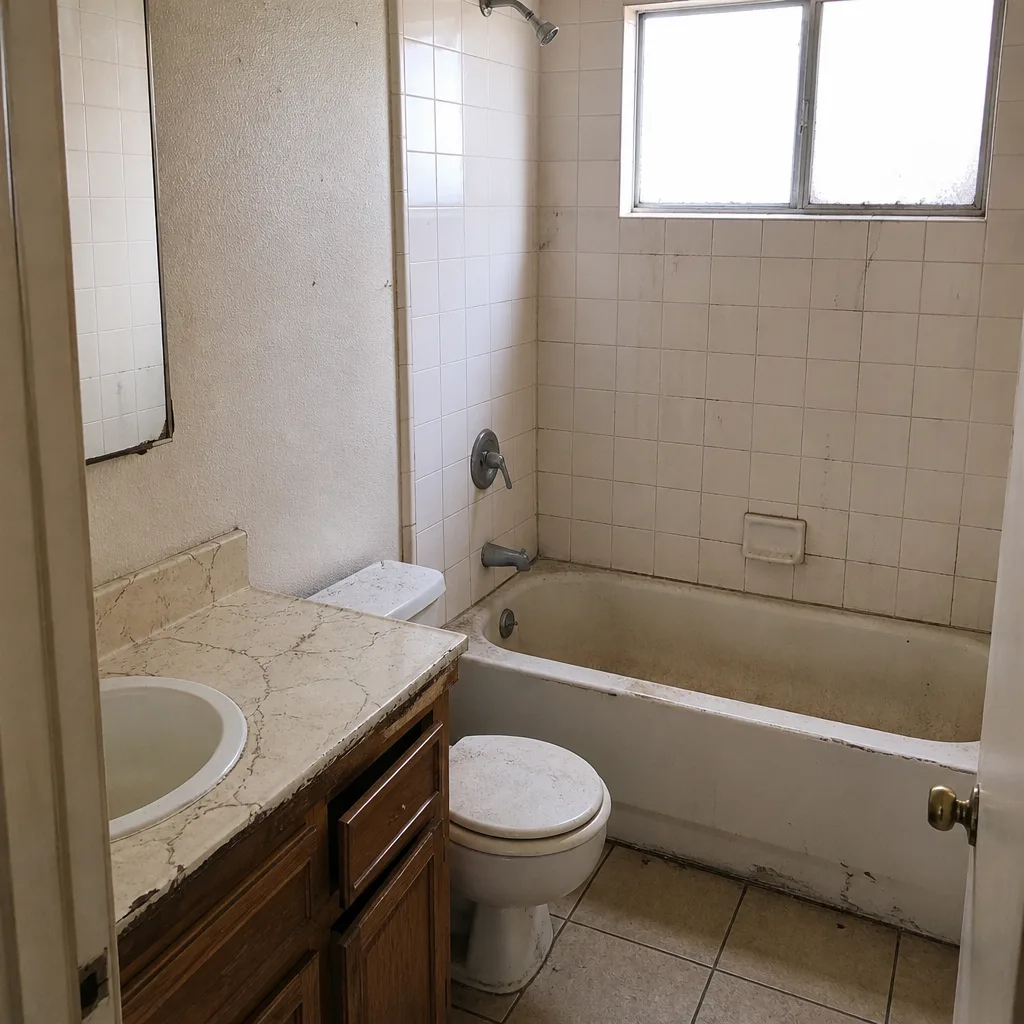 Before
 After
 Before
 After