
Last updated November 17, 2026








Free written scope consultation - allowances, timeline, and change-order rules on paper before a single trade is scheduled
General Contractor Maintenance Checklist for Sunrise Manor Homeowners
The call we get most often after summer in Sunrise Manor isn’t about the air conditioner. It’s about cracked exterior caulk, buckled trim, and paint peeling off in sheets. A $12 tube of the right sealant in May would have stopped all of it. Desert heat works on a house differently than the humid climates most national checklists are written for, and copying advice built for a Portland bungalow will leave a Sunrise Manor home exposed. This guide is built around what we actually see failing here, season by season, and what it costs when small upkeep turns into real repair.
Quick Answer
A Sunrise Manor home needs three inspections a year, not four seasonal ones: a pre-summer caulk-and-seal walk in May, a monsoon check in July and August for roof and drainage issues, and a post-summer assessment in October for heat damage to caulk, stucco, and trim. Add one annual deeper review of stucco, roof coatings, and landscaping interfaces, and most major failures get caught while they still cost under a few hundred dollars.
Styles & brands we work with
- Kitchen remodeling
- Bathroom remodeling
- Home additions & ADU
- Roofing
- Windows & doors
- Driveway & pavers
- Fence
Table of Contents
- Why a Sunrise Manor Home Can’t Run a National Maintenance Calendar
- The Month-by-Month Sunrise Manor Maintenance Calendar
- The Five Exterior Elements a GC Checks First
- Stucco, Flat Roofing, and Landscaping: Who Checks What, and How Often
- What Deferred Maintenance Actually Costs
- How to Document Maintenance for Warranty and Resale
- Interior Checks That Save Six-Figure Problems
- Common Mistakes to Avoid
Why a Sunrise Manor Home Can’t Run a National Maintenance Calendar
Most online home maintenance advice assumes four roughly equal seasons and a climate with regular humidity. Sunrise Manor doesn’t work that way. We get an early, brutal dry stretch from May into June, where temperatures push past 105°F and relative humidity can drop below 10 percent. That dries out caulk and wood trim fast. Then the monsoon window arrives in July and August, and the same house that baked for two months gets sudden heavy rain against walls and roofs that have shrunk and cracked in the heat.
That sequence is what makes the local calendar different. A caulk joint that would last three years in a mild climate can fail in a single Sunrise Manor summer if it’s the wrong product. Acrylic caulk shrinks and cracks under UV and heat cycling. A good polyurethane or siliconized exterior sealant holds up. The difference costs about $4 more per tube and prevents hundreds in trim repair.
Our technicians have up to 22 years of experience in this climate, and the pattern they describe is consistent: spring failures caused by winter neglect, summer failures caused by heat-cracked seals and monsoon water finding them. The issue rarely announces itself. It shows up as a soft spot under a window, a stain on a ceiling corner, or trim pulling away from a wall months after the water got in.
If you’re planning a larger remodel rather than maintenance, the same climate logic applies to materials and sequencing. Our Penhallow Remodeling Sunrise Manor home page covers how we approach projects in this market.
The Month-by-Month Sunrise Manor Maintenance Calendar
This is the calendar we’d give a homeowner here if they asked what to actually put on the fridge. It’s organized around the two weather events that drive most damage: the pre-monsoon heat and the monsoon rains.
- March: Walk the perimeter and look at every caulk joint around windows, doors, hose bibs, and the penetrations where cable or conduit enters the wall. Note cracks, then plan to reseal by early May. Check roof flashing while it’s still mild.
- April: Have the roof coating inspected before heat sets in. Flat and low-slope roofs in Sunrise Manor rely on elastomeric coatings that lose reflectivity and elasticity with UV exposure. A recoating now costs far less than a repair in August.
- May: This is the crucial month. Reseal cracked caulk with a UV-resistant exterior sealant, touch up exposed wood trim, and clear any debris from roof drains and scuppers. Inspect stucco for hairline cracks over 1/16 inch and have them patched and sealed before the heat expands them.
- June: Check the landscaping interface, meaning where soil, planters, or irrigation lines meet the house. Irrigation heads pointed at stucco or a planter bed built up above the weep screed will channel water into the wall. Adjust and pull soil back.
- July and August: Monsoon window. After any heavy rain, check ceilings, attic access points, and the base of exterior walls for staining or damp. Clear roof drains immediately after storms. Don’t let pooled water sit on a flat roof for days.
- September: Do a post-monsoon sweep of the roof, gutters, and window seals. Anything that leaked gets documented with photos and dates.
- October: Post-summer inspection. Heat has now cycled through the house for months. Check every caulk joint again, look for new stucco cracks, inspect trim and fascia for buckling or paint failure, and check door and window operation.
- November through February: Cooler months are the time for the interior jobs and any stucco patching or painting that needs stable temperatures. This is also when to schedule a deeper professional assessment before the cycle restarts.
One caution worth stating plainly: roof work above a single story, and anything involving the roof’s structural connections, is genuinely dangerous work. We recommend a trained professional for roof inspections and any stucco repair that requires working at height or opening the wall assembly. The owner-check items on this calendar are visual, ground-level observations, not repair work.
The Five Exterior Elements a GC Checks First
When a general contractor pulls up to a Sunrise Manor house, we look at five things in order. Each has a specific failure sign to watch for.
- Caulk joints and window seals. Failure sign: cracks in the bead, a gap between caulk and wall, or caulk that pulls away cleanly when you press it. That means water is already finding the gap. Left alone, heat-driven expansion pushes moisture deeper behind each cycle.
- Stucco and its crack pattern. Failure sign: horizontal cracks near the top of walls, stair-step cracks around window and door corners, or any crack wide enough to slide a dime into. Hairline cracks under 1/16 inch are usually cosmetic. Anything bigger or any crack with a rusty stain needs a professional look.
- Roof coating and flashing. Failure sign: coating that looks chalky, faded, or worn thin at high-traffic areas, bubbling seams, or standing water more than 48 hours after rain. On a flat or low-slope roof, this is the difference between a recoat and a replacement.
- Trim, fascia, and sub-fascia. Failure sign: paint peeling to bare wood, trim pulling away from the wall, soft spots when you press it, or swelling at joints. Sunrise Manor heat buckles trim, and monsoon water gets behind it. Once the wood behind the trim is soft, the repair jumps from sealant to carpentry.
- The landscaping and irrigation interface. Failure sign: soil piled above the weep screed (the metal edge at the bottom of the stucco that lets the wall breathe and drain), sprinkler heads aimed at the house, or water pooling at the foundation. This is one of the most common causes of wall damage we see here, and one of the easiest to fix.
Those five checks take an owner less than 30 minutes walking the perimeter. They catch the problems that are cheap in May and expensive in October. If a project is on the horizon, our General Contractor in Sunrise Manor page explains how inspections and scopes work on a real job.
Stucco, Flat Roofing, and Landscaping: Who Checks What, and How Often
Not everything on a checklist should be owner-checked. Knowing which items belong in your hands and which belong to a professional saves both money and risk.
Owner-checked, monthly during summer
- Caulk joints at ground level (visual check only).
- Landscaping and irrigation aim.
- Ground-level stucco cracks less than 1/16 inch.
- Roof drain and scupper clearance, if safely reachable without climbing.
- Any ceiling stains or wall discoloration inside.
Professional assessment, once a year
- Full stucco inspection, including cracks over 1/16 inch and any staining.
- Elastomeric roof coating condition and remaining service life.
- Roof flashing and penetrations (vents, skylights, HVAC curbs).
- Any wall that meets soil, planters, or irrigation lines.
In practice, we recommend having the stucco and roof coating assessed once a year in the cool months, and the post-summer exterior inspection in October. That’s two professional visits a year at most, and both are usually quick. The reason to bring a professional in rather than do it yourself isn’t a lack of skill on the homeowner’s part. It’s that the damaging conditions here hide behind finished surfaces. Stucco can look fine while the wood sheathing behind it is holding moisture. A roof coating can look intact while its waterproofing has already gone.
What Deferred Maintenance Actually Costs
The most useful thing we can tell a Sunrise Manor homeowner is what the same problem costs at three different stages. These are typical ranges for work we see in this market. Your exact number depends on how far damage has spread.
- Preventive stage: Caulk and reseal a dozen exterior joints, tubeless, with materials. Typically $150-$350 when bundled into a handyperson or maintenance visit.
- Early repair stage: Patch and seal a section of stucco with hairline cracks and repaint the repaired area. Typically $350-$900 depending on square footage.
- Rotted trim repair stage: Remove deteriorated trim, replace wood, reseal, and repaint. Typically $900-$2,500 for a handful of windows or door surrounds.
- Wall assembly repair stage: When water has reached sheathing or framing, the scope grows to removing stucco, replacing soft wood, installing proper weather barrier, and reinstalling stucco and paint. That’s a $4,000-$12,000 project on a single wall, and more if interior finishes are affected.
- Flat roof stage: A recoat typically falls between $1,500 and $4,000 depending on square footage. Full membrane replacement is meaningfully higher, often in the $8,000 to $20,000 range. Catching it at recoat is the whole game.
Read those numbers again as a sequence, not a menu. The $150-$350 stage and the $4,000-$12,000 stage are the same failure, caught ten months apart. That’s why we tell people here to treat the May caulk walk as the highest-return 30 minutes of their year.
Whole-home projects and larger remodels show the same economics, just with a bigger line item. Our Kitchen Remodeling in Sunrise Manor and Bathroom Remodeling in Sunrise Manor pages both explain how existing moisture damage gets folded into a scope when it’s found during planning.
How to Document Maintenance for Warranty and Resale
A written maintenance record is worth real money at sale, and it’s the fastest way to settle a warranty dispute. Both come down to the same practice: keep a log.
- Keep a single digital folder per home. Receipts, invoices, and photos, filed by date.
- Date and photograph every repair and inspection. A photo taken from a consistent spot each quarter tells a clear story.
- Save the contractor’s written scope on any work over a few hundred dollars. On the projects we run, every homeowner gets a written price before work starts, so there’s a record of exactly what was done.
- Note the product used. The specific caulk or sealant brand matters because the wrong one fails faster here. A log that names the product helps the next visit go faster.
- Record the 365-Day Done Right Promise on any covered work, along with the date it was performed. If something fails within the guarantee period, that documentation makes the return visit simple.
That last point is where the guarantee becomes practical. Every job at Penhallow Remodeling is covered by the 365-Day Done Right Promise: if the work fails inside the guarantee period, we come back and fix it at no charge. It’s in writing on every project, and it’s backed by a free return visit if the repair fails. That’s only useful if you know when the work happened, which is why the maintenance log matters as much as the work itself.
Interior Checks That Save Six-Figure Problems
Exterior gets most of the attention in this climate, but the interior tells you what the exterior is hiding. A few checks once a quarter will catch slow leaks and structural issues long before they surface as a renovation.
- Under-sink and behind appliances. Slow leaks under sinks and behind the washer or water heater corrode cabinets and floors. Check for staining on the cabinet base and any softness in the floor.
- Ceiling corners and wall edges. Any staining near the ceiling edge or at the top of an exterior wall points to roof or flashing water. Photograph it and date it.
- Doors and windows. Doors that stick in summer and free up in winter are normal to a degree. Doors that stay stuck, or cracks appearing around the frame corners, point to stucco movement or moisture.
- Bathroom caulk and grout. Failed caulk at the tub or shower lets water into the wall behind tile. Cement board substrate (the moisture-resistant layer behind your tile) helps, but the sealant line is the first line of defense.
- Water heater and HVAC closets. Look for rust, condensation, or dampness at the base. In a Sunrise Manor summer, an aging water heater in an unconditioned closet works harder than it would in a mild climate.
None of these require tools. They require 20 minutes and a phone camera. When you’re ready to fix what you find, whether it’s a small exterior reseal or a full bath rebuild, we’re glad to look. Our bathroom work uses moisture-resistant substrates and fixtures from recognized brands like American Standard and Toto, and every project comes with a written price before any work starts. Call (844) 972-4834 and a live person will answer.
Common Mistakes to Avoid
- Using acrylic caulk on exterior joints. It’s cheap and easy to apply, but it cracks fast under Sunrise Manor UV and heat cycling. Spend the extra few dollars on a polyurethane or siliconized exterior sealant and get years instead of months.
- Waiting for the monsoon to check the roof. By the time rain is in the forecast, a flat roof has already dried and cracked for two months. Check the coating in April and May, before the heat sets in.
- Letting soil or planters sit above the weep screed. This is the single most common cause of hidden wall damage we see here. Water wicks straight in and stucco hides it. Pull the soil back and keep irrigation heads off the wall.
- Ignoring hairline stucco cracks in spring. A 1/16-inch crack is cosmetic in March and a water channel by July. It’s a $400 patch in spring and a $6,000 wall repair by fall.
- Skipping the post-summer inspection. October is when heat damage shows up clearly. A house that looked fine in June can have new cracks and buckling trim by October, and the cool months are the right time to fix them.
- Keeping no written record. A verbal “we fixed that” doesn’t help at resale and doesn’t support a warranty claim. Save the invoice, photograph the repair, and note the date.
- Replacing rather than recoating a flat roof without an inspection. A qualified inspection will tell you whether a recoat will extend the roof’s life or whether it’s already past that point. Skip the inspection and you may pay for a full replacement you didn’t need yet.
If you’re not sure whether a problem is in the early or late stage, that’s exactly the question a free estimate answers. We’d rather tell you to wait a season than sell you work you don’t need.
See the difference
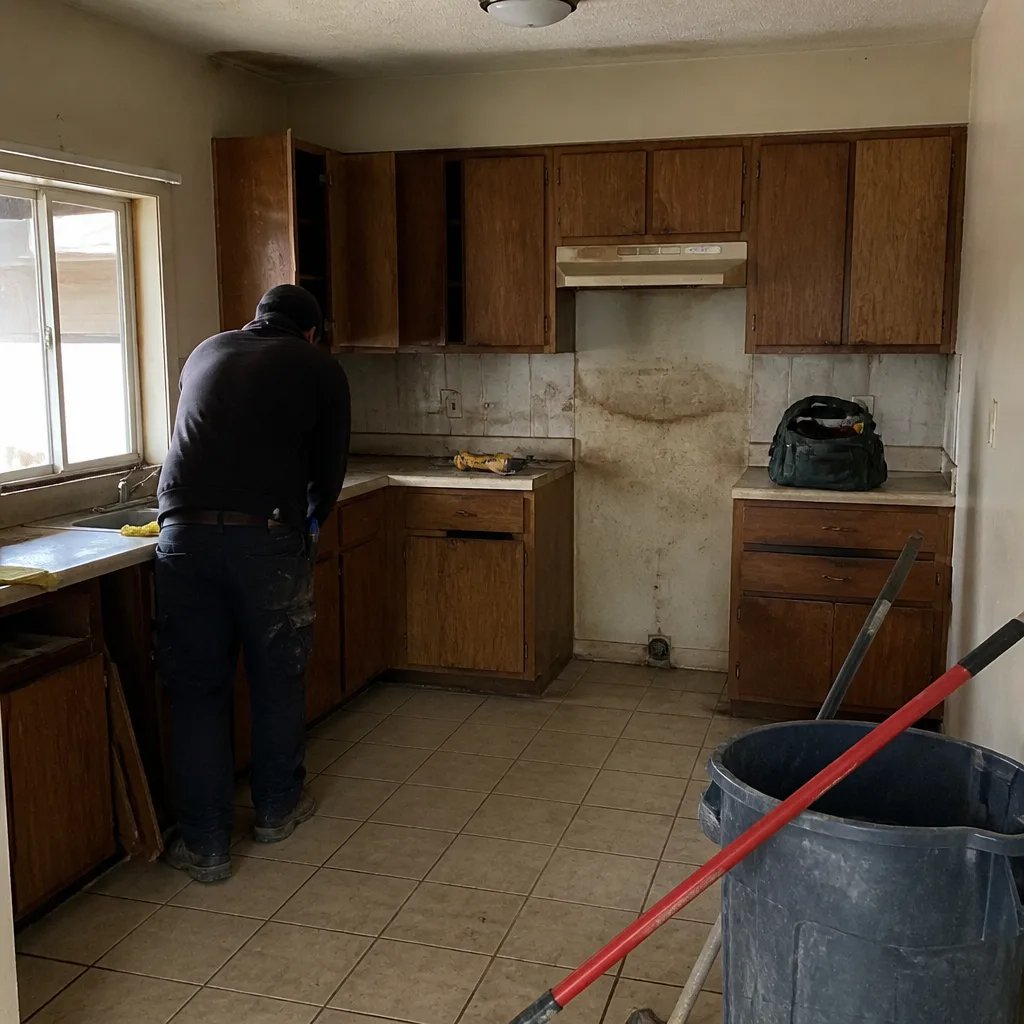 Before
 After
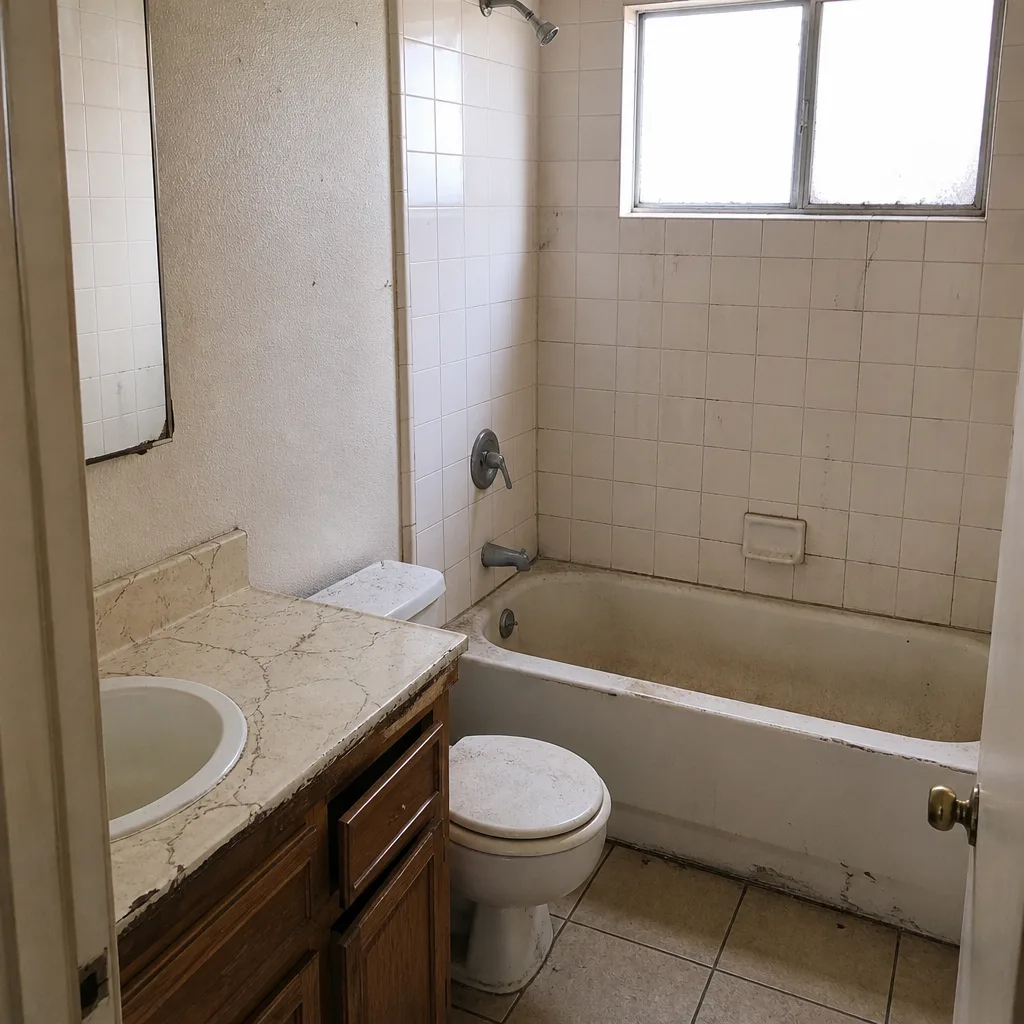 Before
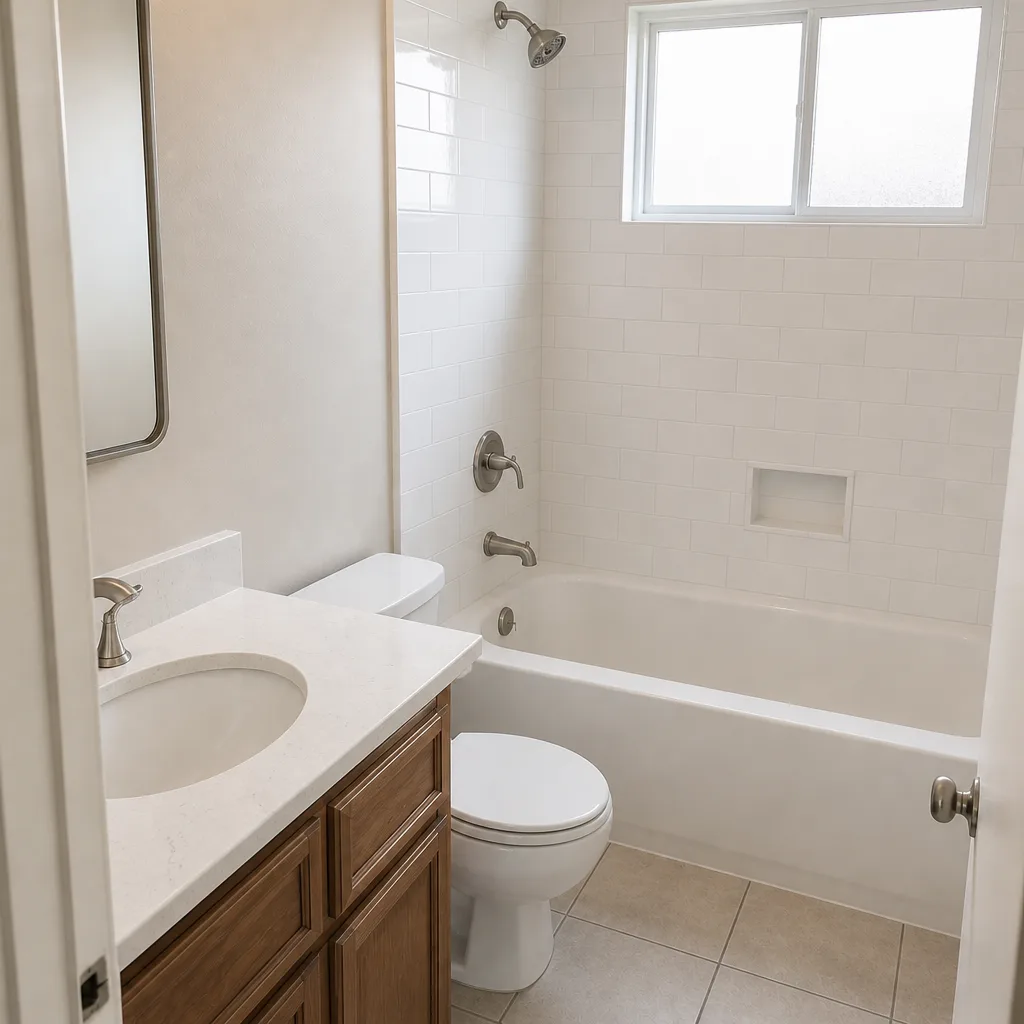 After
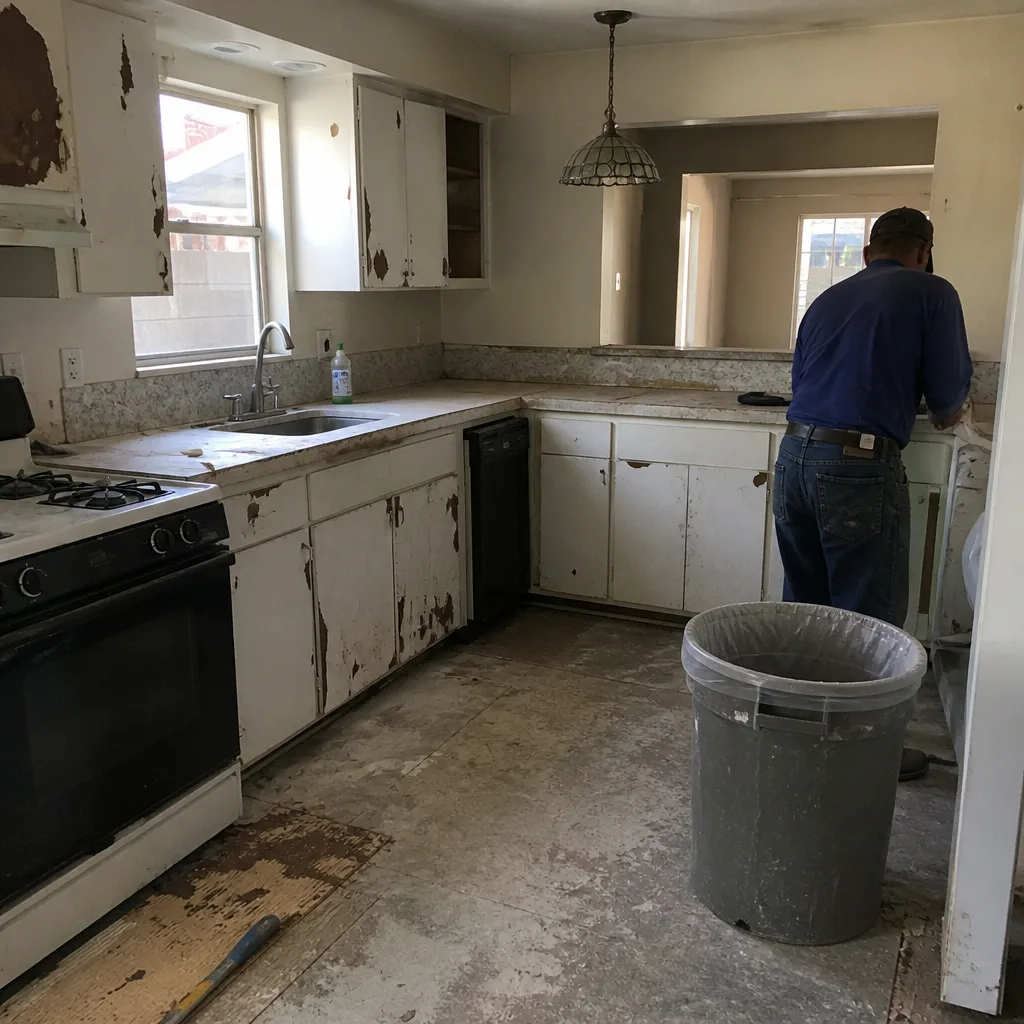 Before
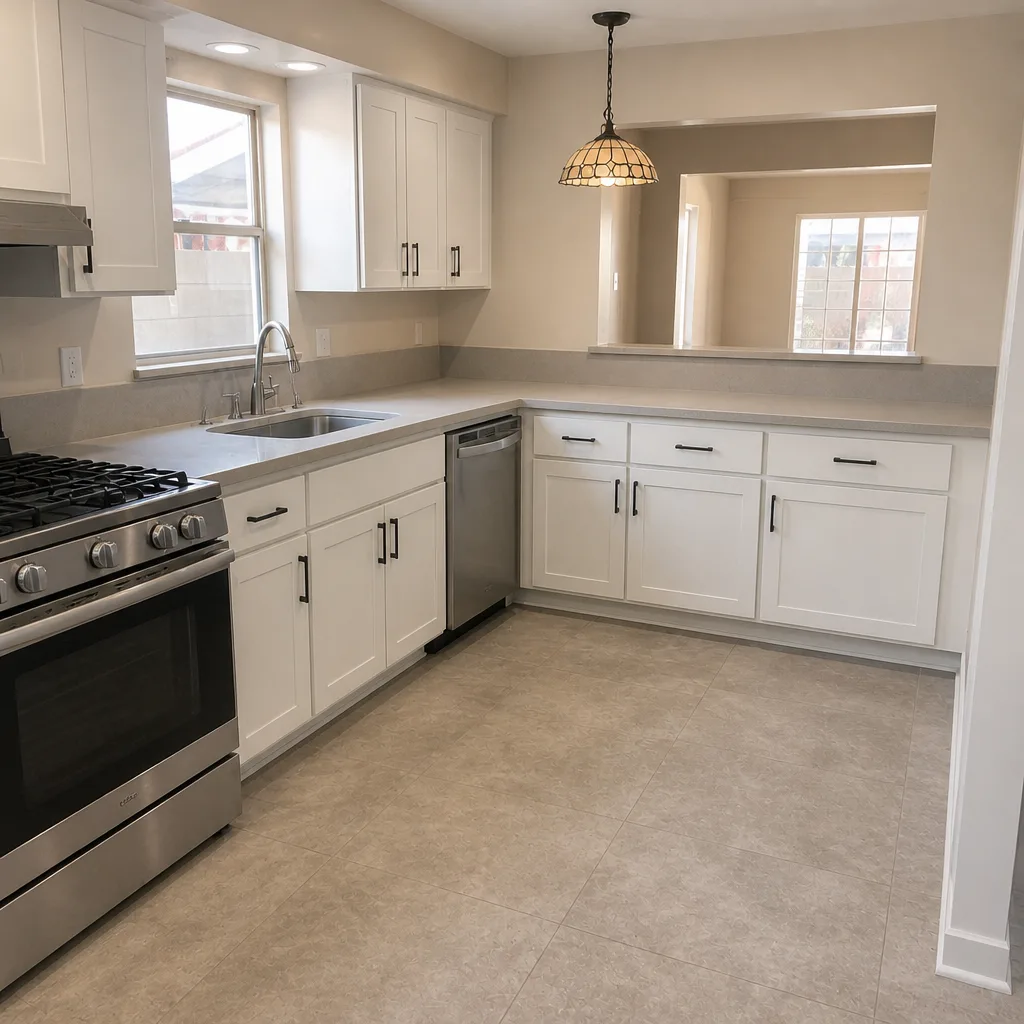 After
When to Call a Professional

Call a professional when the work involves height, structural connections, or the wall assembly itself. That means roof inspections and any roof work, stucco cracks wider than 1/16 inch or cracks with staining, soft wood behind trim, water that has entered the wall, and any flashing or roof penetration repair. It also covers larger interior work where moisture damage is already suspected behind tile or cabinets. In those cases, a trained professional should assess before anything is opened up. For everything else on this checklist, the owner-check items are visual, ground-level, and low-risk, and you can do them yourself.
Penhallow Remodeling Sunrise Manor offers free estimates in Sunrise Manor, with a written price before any work starts. If you’ve got a repair that’s grown past the caulk-gun stage, or you’re planning a kitchen, bath, or whole-home remodel, call (844) 972-4834. A live person answers 24/7, the technicians are background-checked and arrive in uniform, and the work is backed by the 365-Day Done Right Promise in writing.
Frequently Asked Questions
Check every exterior caulk joint once in March and once in October. In Sunrise Manor, the right sealant holds up well, but the combination of 105°F summer heat and monsoon moisture means joints should be visually checked twice a year and resealed the moment you see cracks or gaps.
You should inspect it every year, but reseal only when you find cracks, chalking, or staining. A well-applied exterior paint or elastomeric coating on stucco typically lasts several years in this climate, and premature resealing wastes money. Hairline cracks under 1/16 inch can usually wait until the October inspection.
Letting soil or irrigation sit above the weep screed at the base of the stucco. This is the most common cause of hidden wall damage we see. Water wicks into the wall assembly behind the stucco, and by the time it shows inside, you’re looking at a $4,000 to $12,000 repair instead of a quick adjustment to a sprinkler head and a few cubic feet of soil.
Expect a range of about $4,000 to $12,000 for a wall repair where water has reached the sheathing, compared to $150 to $350 for preventive resealing. Flat roof replacements run $8,000 to $20,000 versus $1,500 to $4,000 for a recoat. The gap between prevention and repair is the argument for the calendar above.
Minor cosmetic stucco patching typically doesn’t require a permit, but structural stucco repair, wall assembly replacement, and full roof replacement generally do. Permit requirements in Sunrise Manor follow the local building authority, and we recommend confirming the scope before work starts. On projects we run, permits are pulled and inspections passed, and the written price includes them.
A preventive reseal visit is often a few hours. Trim repair on several windows can run one to three days, and wall assembly repair typically takes a week or more depending on scope. When you request an estimate, we give you a written price and a defined arrival window, so you know when the technician will be there and how long the work is expected to last.
Not when you work with us. Every homeowner gets a written price before any work starts, so the number on day one is the number on the invoice. If we open a wall and find unexpected damage, we stop, show you what we found, and give you a revised written price for your approval before continuing.
The Bottom Line

Sunrise Manor maintenance runs on its own clock, driven by early summer heat and the July-August monsoon. The work that protects a house here is a March caulk check, a May reseal, a monsoon watch, and an October post-summer inspection, plus one annual professional review of stucco and flat roofing. Prevention costs a few hundred dollars; the same failure at the contractor stage runs into the thousands. Keep a dated written record of every repair, know what your guarantee covers, and call a professional when the work involves height, stucco over 1/16 inch, or anything behind the wall. That’s the whole checklist, and it’s enough.
Written by the team at Penhallow Remodeling Sunrise Manor.