
Last updated November 17, 2026








Free written scope consultation - allowances, timeline, and change-order rules on paper before a single trade is scheduled
General Contractor Warning Signs Every Homeowner Should Know
A contractor who hands you a verbal estimate that lands well below everyone else’s written bid isn’t giving you a deal. They’re buying the job. The gap between that number and reality reappears later as change orders, once demo has started and you’re too far in to walk away. The red flags that actually cost homeowners money are rarely the ones we’re warned about. They hide in ordinary contract language, in a schedule that sounds generous, and in how a contractor behaves during the estimate. This guide names the specific patterns we’ve watched play out on job sites across Sunrise Manor, so you can spot them before you sign.
Quick Answer
The most reliable contractor warning signs are a verbal bid that’s far cheaper than written competitors, a contract with vague terms like “estimated cost” or “time and materials,” a payment schedule tied to dates rather than completed work, pressure to pay a large deposit before any material is ordered, and a general contractor who can start tomorrow in a busy market. Any one of these deserves a second look. Two or more together usually means walk away and get another written bid.
Styles & brands we work with
- Kitchen remodeling
- Bathroom remodeling
- Home additions & ADU
- Roofing
- Windows & doors
- Driveway & pavers
- Fence
Table of Contents
- The Five Contract Phrases That Signal a One-Sided Agreement
- Why “We Can Start Tomorrow” Is Often a Warning
- How to Check a Nevada Contractor’s License the Right Way
- The Payment Schedule Test: Draws Should Follow Work
- What Their Behavior During the Estimate Predicts
- The Deposit Trap and How to Time Your Money
- Warning Signs Specific to the Sunrise Manor Market
The Five Contract Phrases That Signal a One-Sided Agreement
The words in a remodeling contract tell you who carries the risk. When we review a contract a homeowner signed with another company, these five phrases come up again and again on projects that went wrong. None of them is automatically dishonest. All of them shift cost and uncertainty onto you.
- “Time and materials.” This means you pay for every hour and every board, with no cap. A contractor who exceeds their estimate has no obligation to absorb the overrun. You do.
- “Estimated cost.” The word “estimated” gives them a legal exit from the number. Ask for a fixed price or a clearly labeled not-to-exceed figure.
- “As conditions allow.” Often attached to timelines and scope. It sounds reasonable. In practice it means the schedule and scope have no floor, and you have no recourse when conditions (always) don’t allow.
- “Subject to change.” Fine when paired with a written change-order process and your signed approval. Dangerous when it sits alone next to a price.
- “Homeowner responsible for.” Watch what follows. Permits, dumpster, protection of floors, dust control, cleanup. Each one is a real cost that can run into the thousands.
A fair contract puts the price in writing before the work starts and spells out what a change order looks like. We do this on every project through the general contractor in Sunrise Manor service, and it’s the reason the number on day one is the number on the invoice.
Why “We Can Start Tomorrow” Is Often a Warning
In a healthy construction market, good general contractors are booked out. A crew that can break ground on a full kitchen remodel tomorrow is either small enough that they take anything, or they’ve had cancellations you should ask about directly. In Sunrise Manor, where remodel demand runs strong and permitted work has to clear the county, a company with an open calendar next week usually has an open calendar for a reason.
Ask two questions when you hear “we can start right away.” First: how many jobs are you currently running? A GC managing more than two or three active remodels at once will struggle to keep your job moving. Second: who is actually on my site, and are they your people or subs you haven’t vetted? A fast start from a company that can’t name its crew is a fast start with no accountability.
A legitimate contractor gives you a real start date in writing and stands behind it. “We can start Tuesday” is fine if it’s in the contract and the arrival window is defined. “Whenever you’re ready” from a company with no written schedule is not.
How to Check a Nevada Contractor’s License the Right Way
Every contractor working in Nevada should be licensed through the Nevada State Contractors Board, or NSCB. The portal is public and free to use. Checking it takes five minutes and protects you from the single most expensive mistake a homeowner can make: hiring an unlicensed contractor and learning it after the work fails.
Here’s how to do it right:
- Go to the NSCB license search and enter the contractor’s license number, which they must display on bids and contracts.
- Confirm the license type matches the work. A general contractor license covers whole-home and structural work. Some trades hold limited licenses, so make sure the classification fits your project.
- Read the status carefully. “Active” is not the same as “in good standing.” Active means the license hasn’t been suspended. In good standing means there’s no disciplinary action, no unresolved complaints, and no bond issue. Ask for the latter.
- Check the bond and insurance on the record. A current license carries a bond; if the bond amounts are out of date, that’s a red flag on the contractor’s ability to pay for failures.
- Look up the license holder’s name and compare it to the person signing your contract. A “borrowed” license is a real problem.
Nevada also requires residential contractors to carry workers’ compensation and liability coverage. If a contractor tells you they’re “self-insured” or “don’t need it for small jobs,” that’s your cue to walk.
The Payment Schedule Test: Draws Should Follow Work
A real draw schedule tracks work completed, not calendar dates. This is the single most useful test we can offer. If your payment schedule says “June 1: $15,000,” you’re paying for time, not progress. If it says “Upon completion of rough framing: $15,000,” you’re paying for a milestone you can verify with your own eyes.
A fair schedule usually looks like this:
- A modest deposit at signing, typically tied to ordering materials or pulling permits.
- Draw two after demolition and rough-in, when framing, electrical and plumbing are inspected.
- Draw three after drywall and substrate work.
- Final payment on substantial completion, after your punch list is walked and signed off.
Watch for a contractor who wants the bulk of the money before demo. Legitimate material orders need a deposit, but that deposit shouldn’t be half the job. Watch just as carefully for a company that wants a large cash payment with no receipt and no invoice. Written invoices protect you.
The written price and the guarantee belong to you from the start. That’s the standard we operate to, and the reason homeowners end up at Penhallow Remodeling Sunrise Manor home after a bad first experience elsewhere.
What Their Behavior During the Estimate Predicts
How a contractor behaves in the estimate phase tells you how they’ll behave mid-job. We’ve watched this pattern enough times to trust it. Specific behaviors to read:
- Do they answer the phone when it’s not the sale? A company that returns your call promptly before you sign will usually answer after you’ve paid. One that ghosts you for a week during bidding will ghost you during demo.
- Do they put the estimate in writing the first time? Verbal-only estimates are the number one signal of change orders to come. A written bid takes effort, and a company willing to do that effort is a company that plans.
- Do they tell you what they’re not including? An honest estimate lists exclusions (dumpster, permits, moving appliances, patching drywall). A bid with no exclusions listed is hiding costs.
- Do they push you to sign today? Urgency in the estimate phase is a sales tactic, not a service. Real construction markets don’t have “only two slots left.”
- Do they show up in uniform and on time for the estimate? This is a preview. Background-checked uniformed technicians are how we staff our estimates; the same people show up on job day.
If the estimate meeting feels rushed, if the price is verbal, if exclusions go unmentioned, expect the same in the build. That’s the honest forecast.
The Deposit Trap and How to Time Your Money
The classic scam is a big deposit followed by a disappearing crew. The subtler version is a contractor who takes a large deposit, then uses your money on a different job before your material is ever ordered. Both hurt. The fix is to time your money to the work.
Ask for a written draw schedule and a material order confirmation before any large payment moves. Reliable materials arrive from brands like KraftMaid, Cambria and James Hardie through real suppliers, and a legitimate company can show you an order confirmation in your name with a delivery date. If a contractor can’t produce an order confirmation for cabinets and your job is a kitchen, that is a problem.
Never pay in cash with no invoice. Use a check or a card. Both create a record. A cash-only contractor who won’t produce an invoice is either unlicensed or evading something.
Warning Signs Specific to the Sunrise Manor Market
A few warnings matter more in Sunrise Manor than elsewhere. Our summers push daytime temperatures past 110, and that shapes the construction calendar. A general contractor who promises to run hardsiding work in July without adjusting for heat is a contractor who hasn’t done much work here. Roof work, exterior painting and any outdoor install move to early morning and rotate around the heat; a schedule that ignores this tells you the company is new to the market, not that they’re fast.
The housing stock matters too. Much of Sunrise Manor’s mid-century ranch and 1970s and 1980s construction has the original window frames, plumbing and subfloor behind it. Any kitchen or bath remodel that doesn’t include a contingency for surprise moisture or old framing is a bid that will change as soon as you’re inside the wall. That’s not a scam. That’s just physics. But a bid that pretends it won’t happen to you is a bid written to get signed.
Permitted work in Sunrise Manor runs through Clark County, and the permit process is real. A contractor who promises to “handle it later” on a structural change or a bathroom plumbing relocation is one you want to walk away from. Permits and inspections protect you in resale and in any future insurance claim.
If you’re looking at specific remodel work in the neighborhood, our guides on kitchen remodeling in Sunrise Manor and bathroom remodeling in Sunrise Manor cover what the local job actually involves, from substrate to scheduling around the season.
Common Mistakes to Avoid
- Choosing the lowest verbal bid. A verbal estimate is not a contract price. When a written bid from one company is 20 percent higher than a verbal bid from another, the written bid is usually the honest number.
- Paying for “materials” before seeing an order confirmation. Ask for a supplier confirmation in your name before you move money. No confirmation, no payment.
- Skimming the exclusions section. That line listing “dumpster, permits, patching not included” is where the real cost lives in Sunrise Manor. Read it twice.
- Skipping the NSCB check. Five minutes on the portal saves you the difference between a licensed professional and a gone-in-60-days contractor with no bond to cover a failure.
- Assuming a fast start date means good service. In a busy market, a contractor with tomorrow free is either overbooked or underworked. Ask which.
- Ignoring your gut on communication. If it takes three calls to get a bid, it will take three weeks to get a callback once the job starts.
- Not asking for a written guarantee. Any real contractor will put their workmanship warranty in writing. If they won’t, you’re carrying all the risk long after they leave.
See the difference
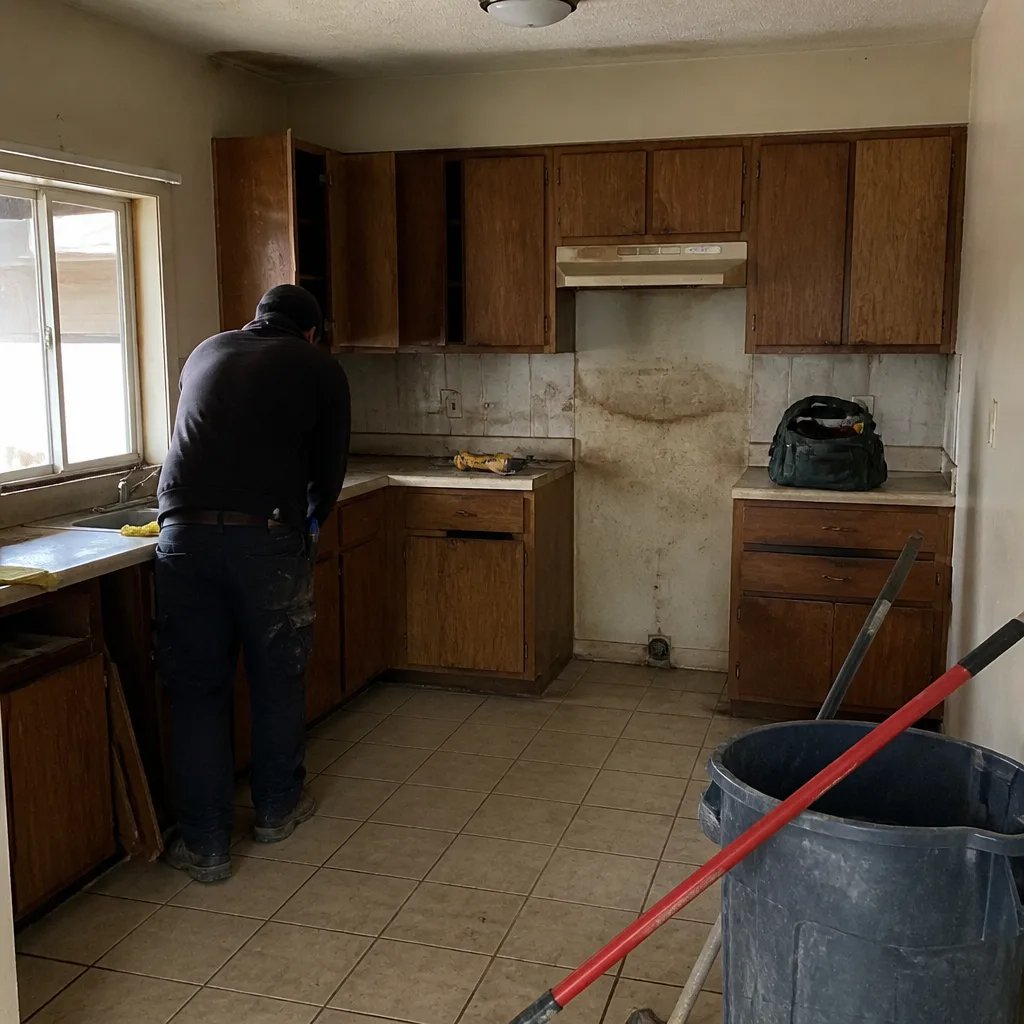 Before
 After
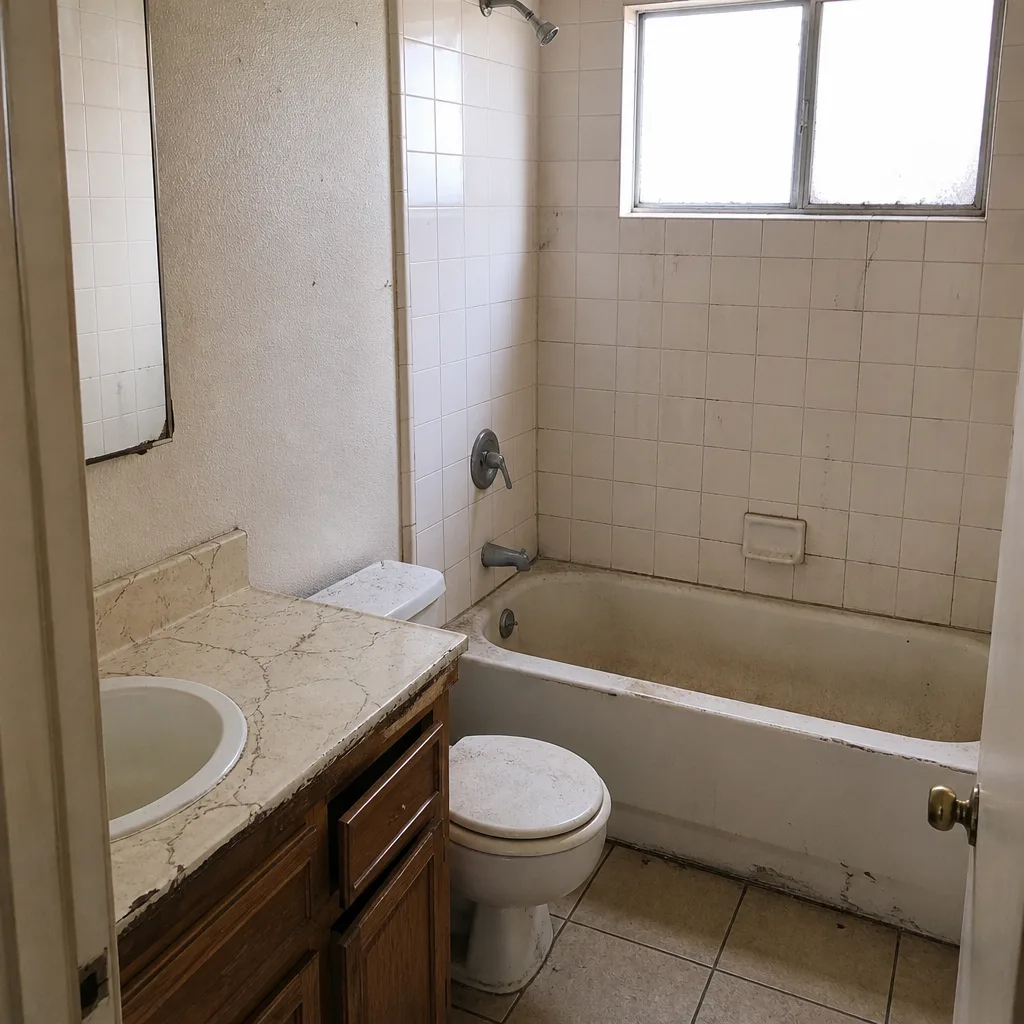 Before
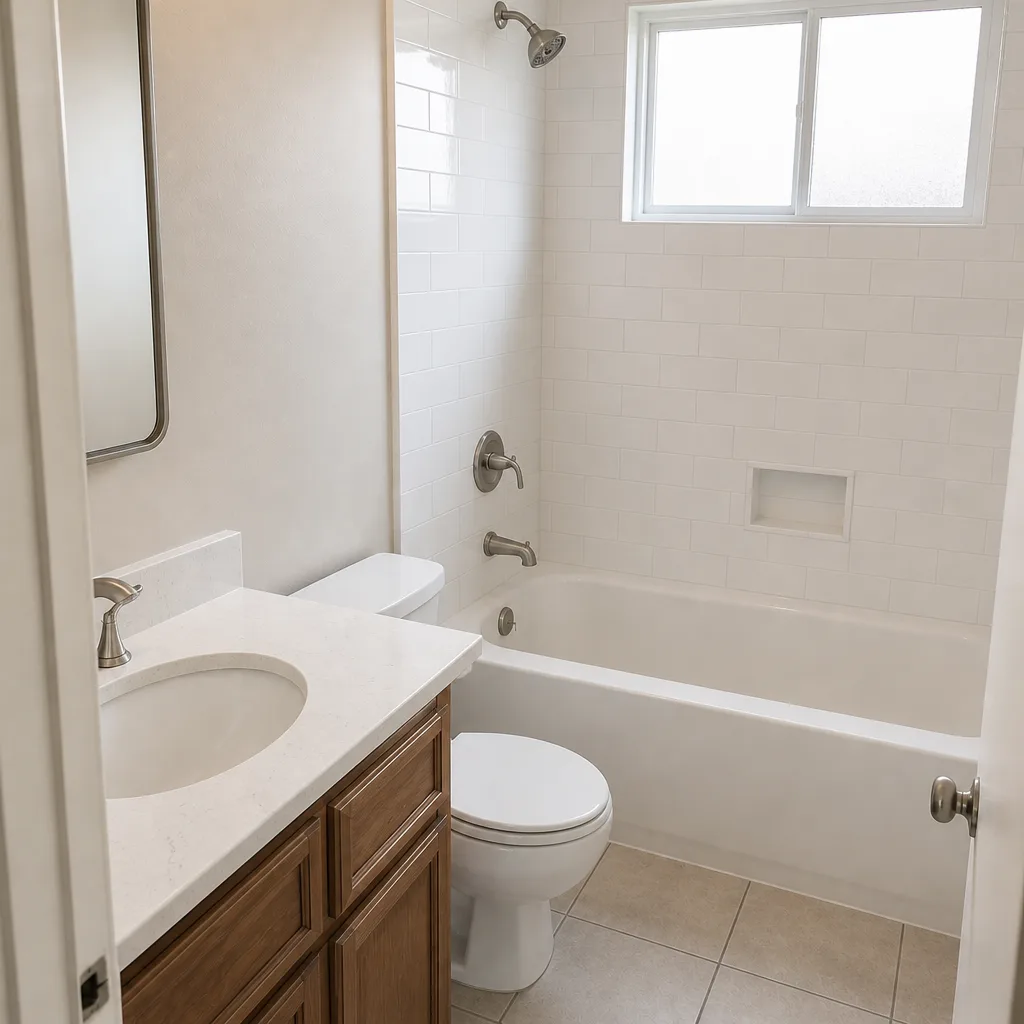 After
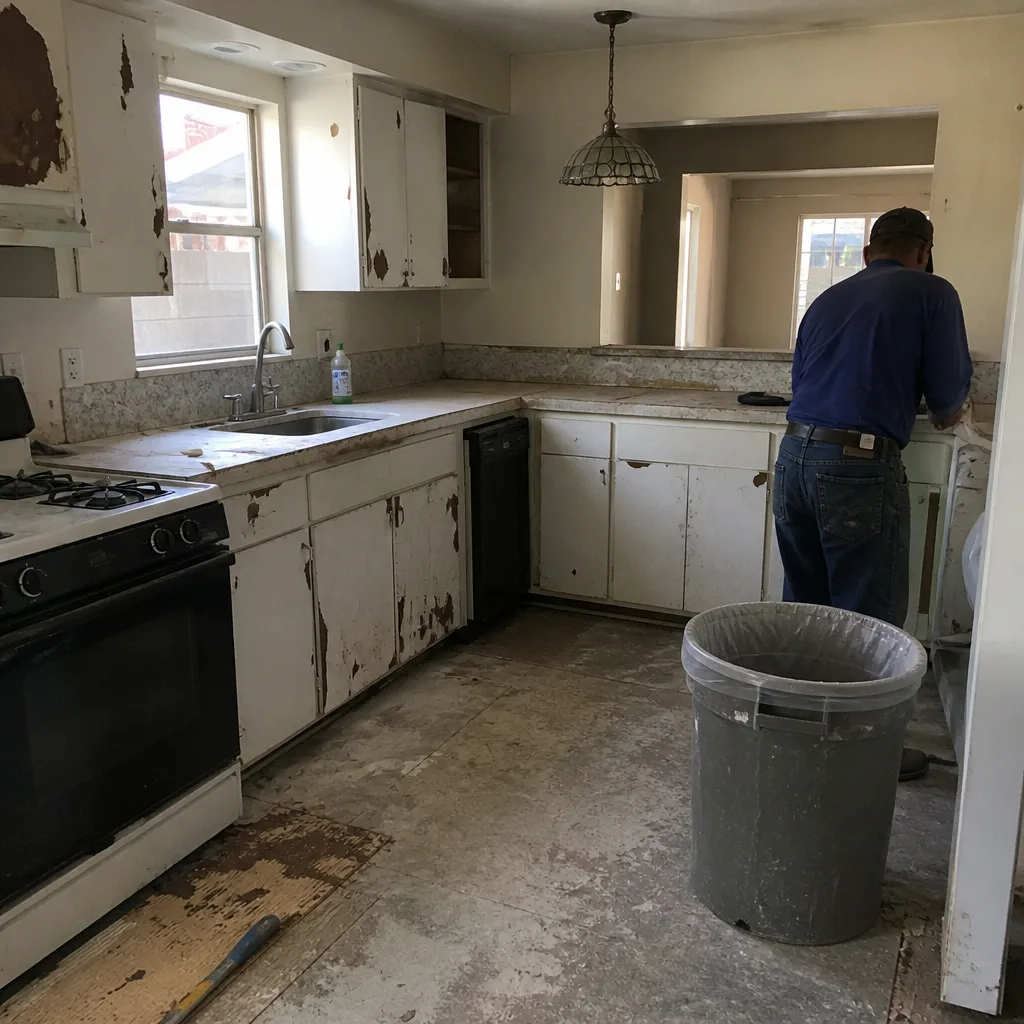 Before
 After
When to Call a Professional
Some situations don’t need a second opinion or a bad-contractor story to justify a call. If your current contractor’s draw schedule has already been paid in full and the work hasn’t started, if a crew has missed the same arrival window twice with no explanation, if a bid uses “time and materials” with no cap, or if you’re standing in a kitchen with cabinets half-installed and no written change order, call a licensed professional and compare. If the work involves moving a load-bearing wall, rerouting plumbing or electrical, or a permitted change you don’t have paperwork for, you need a licensed general contractor, not a handyman. Penhallow Remodeling Sunrise Manor offers free estimates in Sunrise Manor. Call (844) 972-4834 and we’ll walk through what you have in writing and what a fair bid looks like, with our written price before any work starts.
Frequently Asked Questions

Change orders are the most common source of contractor disputes, and most of them trace back to an estimate that hid exclusions or quoted a verbal figure the contractor was never obligated to hold. A written price with a clearly stated change-order process at signing eliminates the majority of these. Call (844) 972-4834 for a free estimate that puts every line in writing.
Use the Nevada State Contractors Board, or NSCB, online portal. Search by license number, confirm the classification matches your project, and read the status carefully. “Active” means the license isn’t suspended, but “in good standing” means no disciplinary action or unresolved complaints, and that’s the bar you should hold a general contractor to in Sunrise Manor. Call (844) 972-4834 if you want help reading a bid against a license record.
A verbal estimate is not a contract price and generally isn’t enforceable as one, which is why contractors use it freely. What matters legally is the signed contract language and the written price you can hold them to. Always ask for the number in writing before signing anything. Call (844) 972-4834 for a written estimate that you can rely on from day one.
A reasonable deposit is typically modest and tied to real material orders or permit pulls, not half the job. Ask for an order confirmation from the supplier before the money moves, especially on cabinetry, and tie the rest of the draws to completed milestones. Call (844) 972-4834 to see how a written draw schedule lines up with completed work on your project.
“Time and materials,” or T&M, means you pay for every hour worked and every material used, with no cap on the total. It shifts the risk of overruns to you, so ask for a fixed price or a written not-to-exceed figure instead. Call (844) 972-4834 and we’ll put a written price on the table before any work begins.
It matters because it signals the company has a standard it applies to every job, including the estimate and the build. A contractor who shows up late, unidentifiable or without a crew they can vouch for will usually behave the same way once they have your deposit. Background-checked uniformed technicians are how Penhallow operates, and it’s a preview of the whole job. Call (844) 972-4834 for a free estimate.
The Bottom Line
The most dangerous contractor warning signs aren’t the obvious ones. They live in contract language that shifts risk to you: “time and materials,” “estimated cost,” “as conditions allow,” and “homeowner responsible for.” They show up in a payment schedule that follows dates instead of completed work, and in a start date that’s available tomorrow in a market that isn’t. Check the NSCB license record for status, not just “active.” Watch how the contractor behaves during the estimate, because that behavior predicts the whole build. Hold the number in writing. Hold the guarantee in writing. In Sunrise Manor and across the valley, those two things are what separate a remodel that finishes from a remodel that finishes you.
Written by the team at Penhallow Remodeling Sunrise Manor.
Ready for a written price and a written guarantee before any work starts? Call (844) 972-4834 for a free estimate. Every Penhallow job gets a written price up front, a real arrival window, and our 365-Day Done Right Promise: if it isn’t done right, we come back and fix it at no charge. A live person answers the phone around the clock, and every technician on your job is background-checked and in uniform.