
Last updated November 17, 2026








Free written scope consultation - allowances, timeline, and change-order rules on paper before a single trade is scheduled
General Contractor Maintenance Schedule: What to Do and When
Most paint warranties require caulk joints to be re-sealed within 12 months of application. Almost no homeowner knows that until a claim gets denied. The same pattern shows up with window seals, waterproofing membranes, and roof flashing: the manufacturer covers the product but not the neglect, and the maintenance task that keeps the warranty alive is buried in a document nobody reads. This guide gives you a concrete first-year calendar for the work a general contractor just finished on your home, tuned to Sunrise Manor’s desert climate, plus the records to keep so the coverage holds up when you need it.
Quick Answer
A finished remodel needs hands-on maintenance at set intervals: caulk and grout in the first 6 to 12 months, exterior seals and paint inspections every 12 months, HVAC filter changes every 1 to 3 months, and a foundation and drainage check once a year. In Sunrise Manor, low humidity and intense UV push exterior timelines faster than the national average, so caulk and paint checks belong on a 9-month cycle, not a 12-month one. Miss those windows and you can void manufacturer warranties on windows, roofing, and waterproofing even when the product itself was fine.
Styles & brands we work with
- Kitchen remodeling
- Bathroom remodeling
- Home additions & ADU
- Roofing
- Windows & doors
- Driveway & pavers
- Fence
Table of Contents
- The First-Year Maintenance Calendar, Month by Month
- Why Sunrise Manor Wear Runs Faster Than National Timelines
- The Maintenance Tasks That Void Manufacturer Warranties
- Building a Home Maintenance Log That Protects Resale Value
- The Annual Foundation and Drainage Check
- Interior Systems: Grout, Tile, Cabinets, and Ventilation
- Seasonal Exterior Checks for Desert Homes
- What to Do Yourself and What to Hand Off
The First-Year Maintenance Calendar, Month by Month
The first 12 months after a remodel are the highest-risk window for the work itself. Materials move as they cure, caulk shrinks, and grout settles. Here’s the schedule we walk homeowners through at the end of every project in Sunrise Manor.
- Month 1: Check every caulk joint in bathrooms and kitchens for gaps at the tub, sink, and backsplash. Run water in all drains and look under cabinets for weeping.
- Month 2: Replace the HVAC filter. After a remodel, dust and drywall particulate load filters fast; a second change at month two is normal.
- Month 3: Inspect grout lines in showers and floors. Sealed grout should still bead water. If it absorbs, reseal.
- Month 4: Walk the exterior. Look at caulk around windows and doors, and check that downspouts still route water away from the foundation.
- Month 6: Re-check all caulk joints. This is the first re-seal most homeowners need, and skipping it is where paint warranties get fragile.
- Month 9: Inspect exterior paint on south- and west-facing walls, the sides that take the most sun in Sunrise Manor. Touch up any chalking or hairline cracks.
- Month 12: Full annual review: foundation, drainage, roof flashing, window seals, water heater pan, and a written record of everything you did.
The pattern repeats every year after that, with the exterior shifted earlier to account for the local sun load. If you’re planning a kitchen remodeling in Sunrise Manor, build this calendar into your handover conversation so the first filter change and grout check happen on schedule.
Why Sunrise Manor Wear Runs Faster Than National Timelines
Most maintenance schedules you’ll find online were written for temperate climates with moderate humidity. Sunrise Manor doesn’t work that way, and the difference is measurable. Relative humidity here routinely sits in the teens and single digits, which pulls moisture out of caulk and wood trim and makes both shrink and crack sooner. UV intensity is the other half of the problem: south- and west-facing surfaces take sun most of the year, and that sun breaks down paint binders and caulk polymers faster than the national average assumes.
What that means in practice:
- Exterior caulk joints need inspection every 9 to 12 months, not every 18 to 24.
- Exterior paint on sun-facing walls often shows chalking or hairline cracks within 3 to 4 years, not 6 to 8.
- Wood trim on west-facing walls dries and checks faster; sealing it matters more than painting it.
- Paver joints and hardscape sand need topping up after summer, because the heat pulls moisture and fines out of joints.
- Irrigation and drainage matter more than rain: your sprinkler overspray, not rainfall, is what undermines foundations here.
We’ve seen west-facing trim in Sunrise Manor check and split inside two summers when the seal coat was skipped. That’s not a quality problem with the material. It’s a schedule problem. The good news is that a 9-month exterior cycle costs a fraction of premature repainting, and it keeps the original finish inside its warranty window. When we install Penhallow Remodeling Sunrise Manor home exterior work, we hand over a written maintenance card with these local timelines on it, because the schedule is part of the job.
The Maintenance Tasks That Void Manufacturer Warranties
Manufacturers almost never cover a product that fails because it wasn’t maintained, and they spell out exactly which maintenance they require. The problem is that the requirement sits in a warranty booklet that gets filed and forgotten. Here are the four most common traps we see homeowners hit.
- Windows: Most window warranties require that perimeter caulk joints be inspected and re-sealed at least annually. If water gets behind the frame because the caulk failed and wasn’t re-sealed, the claim for a rotted frame gets denied.
- Roofing: Roof warranties generally require that flashing, sealant, and debris be checked at least once a year, sometimes twice. A clogged valley or piled-up debris that causes water backup is treated as neglect, not a product defect.
- Waterproofing membranes: Shower and wet-area membrane warranties typically require that grout and caulk be kept sealed and that no unsealed penetrations be added. A homeowner who screws a new shower fixture through a waterproofed wall without sealing it can lose the membrane coverage entirely.
- Exterior paint and stain: Paint warranties almost always require caulk joints to be re-sealed within 12 months of application and re-sealed on an ongoing cycle. Skip it and the peeling claim is denied before it’s even evaluated.
Every manufacturer asks for the same thing at claim time: proof of maintenance. That’s why the calendar and the log matter together. If you’d rather not track it yourself, we can walk you through what your specific products require. Our technicians have up to 22 years of experience with these systems, and we’re happy to explain the requirement for a window or a membrane in plain English before a claim is ever needed.
Building a Home Maintenance Log That Protects Resale Value
A maintenance log is the simplest, cheapest thing you can do to protect the value of a remodel, and almost nobody keeps one. Buyers’ inspectors look for maintenance records. They check whether the work was looked after, whether the caulk is intact, whether the grout is sealed, whether the drainage was maintained. A missing log doesn’t just mean a little negotiation. It means the inspector assumes the worst and prices it in.
You don’t need an elaborate system. Here’s what a useful log contains:
- The date and what you did, in one line (“re-caulked tub surround, June”).
- The product used, with the brand name and the tube or can kept on file if possible.
- Photos of the completed task, one wide shot and one close-up.
- Receipts for any product you bought or contractor you called.
- The manufacturer warranty for each installed product, filed with the log, not in a drawer.
Keep it in a shared digital folder and add a note to your phone calendar every time a task comes due. When you sell, that log goes into the disclosure packet. In Sunrise Manor’s resale market, a documented maintenance history is worth real money at the negotiating table, and it’s the difference between a confident inspection and a long list of “recommend further evaluation” line items. If you’re working with a General Contractor in Sunrise Manor on a larger project, ask for the maintenance card on day one so you know what goes in the log before the crew leaves.
The Annual Foundation and Drainage Check
Nevada’s clay-heavy soils expand when wet and shrink when dry, and Sunrise Manor’s dry stretches push that cycle hard. A foundation that’s fine today can shift measurably if water pools next to it in one season and disappears the next. The check that catches this early is simple and takes about an hour a year.
Walk the perimeter and look for these signs:
- New hairline cracks in drywall above doorframes or in corners, especially after a wet winter.
- Doors or windows that stick or swing differently than they did a year ago.
- Gaps at the base of exterior walls where caulk has separated from the slab.
- Standing water, sprinkler overspray, or a downspout dumping close to the foundation.
- Separation between the slab and hardscape, or settled pavers near the house.
None of these alone means a problem, but two or three together across one year is a pattern worth investigating before it undermines a remodel or an addition. In our experience, irrigation rerouting and gutter corrections fix most of what we see in Sunrise Manor, and they cost a fraction of foundation repair. The point isn’t to scare you. It’s that this is the one check that undoes a finished basement or addition if it’s skipped, and it’s cheap to do every spring.
Interior Systems: Grout, Tile, Cabinets, and Ventilation
Inside the house, the maintenance pattern is quieter but no less important. Grout is porous by nature, and in Sunrise Manor’s dry air it dries out and shrinks at joints, which opens paths for water in wet areas. Sealed grout should bead water on contact. If water darkens it, it’s time to reseal. Bathroom and shower grout usually needs resealing once a year; kitchen floors and backsplashes every 12 to 18 months.
The other interior tasks worth scheduling:
- Cabinets: Check hinges and drawer glides twice a year. A loose hinge on a soft-close door is cheap to fix and expensive to ignore.
- Countertops: Quartz surfaces like Cambria, Silestone, and Caesarstone need nothing more than a damp cloth and a pH-neutral cleaner; avoid abrasive pads that dull the finish.
- Ventilation: Clean bathroom fan grilles and the kitchen range filter every season. Clogged filters strain the fan motor and reduce moisture removal, which is the whole point of the fan in a dry climate.
- Water heater: Check the pan and the pressure relief valve line annually; look for mineral crusting at connections.
If your bathroom remodel is the piece you’re most invested in, ask us for the specific resealing timeline on your tile and grout when we finish, and we’ll match it to the products we actually installed. Having a Bathroom Remodeling in Sunrise Manor done and then maintaining it on the right schedule is how the finish stays sharp for a decade or more.
Seasonal Exterior Checks for Desert Homes
Exterior maintenance in Sunrise Manor runs in two seasons, not four: the hot stretch and the cool stretch. Here’s what belongs in each.
Before summer (March through May):
- Re-seal caulk joints on south- and west-facing windows and doors, the walls that take the most UV.
- Inspect exterior paint for chalking, crackling, or peeling, and touch up early while the surface is sound.
- Reset and top up paver joint sand, especially around patios and walkways, using a polymeric sand from a trade brand like Techno-Bloc or Cambridge Pavers where the original install used one.
- Check the roof, gutters, and flashing for debris and loose sealant before the monsoon-adjacent storms.
Before winter (October through November):
- Walk the perimeter for new cracks and check that irrigation isn’t overspraying the walls.
- Re-seal any wood trim that showed checking over the summer.
- Look at window seals and weatherstripping before the cooler months make drafts obvious.
- Inspect concrete and hardscape for settled sections after summer heat.
These are the tasks that keep an exterior remodel looking new for years. Skip them and the sun and the dry air will do the work for you, faster than the national timelines would predict. There’s no urgency here, but there is a schedule, and it’s easier to stay on than to catch up.
What to Do Yourself and What to Hand Off
Most of this calendar is homeowner-friendly. Changing filters, resealing grout, checking caulk, and keeping the log are all things most people can do themselves with a tube of sealant and a free afternoon. That’s the right division of labor: you do the routine checks, and the moment something looks structural, you stop and call.
The tasks best handed to a professional are the ones where the cost of a mistake is high: roof and flashing inspection if you’re not comfortable on a ladder, foundation evaluation when you see a pattern of cracks, any repair that opens a wall or a waterproofing membrane, and any electrical or gas work. Those aren’t DIY categories, and we say that plainly. The point of the schedule is to catch small problems while they’re still small, not to turn a homeowner into a technician.
When something does need a professional touch, the right move is to get a written price before anyone starts. That’s the standard we work to, under The Kingswell Way: say the price before the work, show up in the window we gave, leave the place cleaner than we found it. It’s the same reason we put our pricing in writing on day one and stand behind it for 365 days with the Done Right Promise, and it’s why our phone is answered by a real person around the clock at (844) 972-4834 if something comes up and you need a straight answer.
Common Mistakes to Avoid
- Skipping the 12-month caulk re-seal. It’s the single most common missed task in Sunrise Manor, and it’s the one that gets paint and window warranty claims denied. Put it on the calendar the day the job finishes.
- Assuming a dry climate means no moisture problems. Sunrise Manor’s sprinkler overspray and drainage are the real moisture source, not rain. Pooling by a foundation does more damage than a wet season elsewhere.
- Resealing grout without cleaning it first. Sealant over a dirty joint cures on top of the grime and fails early. Clean and dry the grout before you seal, every time.
- Keeping the log in your head. If it isn’t written down and dated, it doesn’t exist at claim time or at sale time. A shared folder and a phone reminder do the whole job.
- Ignoring hardscape joint sand. Desert heat and dry air pull sand out of paver joints faster than most climates, and a Weed-filled joint is a settled paver waiting to happen.
- Treating a hairline crack like a coincidence. One crack is normal settling. A pattern of new cracks across a year means it’s time for a look.
- Using the wrong cleaner on quartz counters. Abrasives and acidic cleaners dull the finish on Cambria, Silestone, and Caesarstone. A pH-neutral cleaner and a soft cloth are all they need.
See the difference
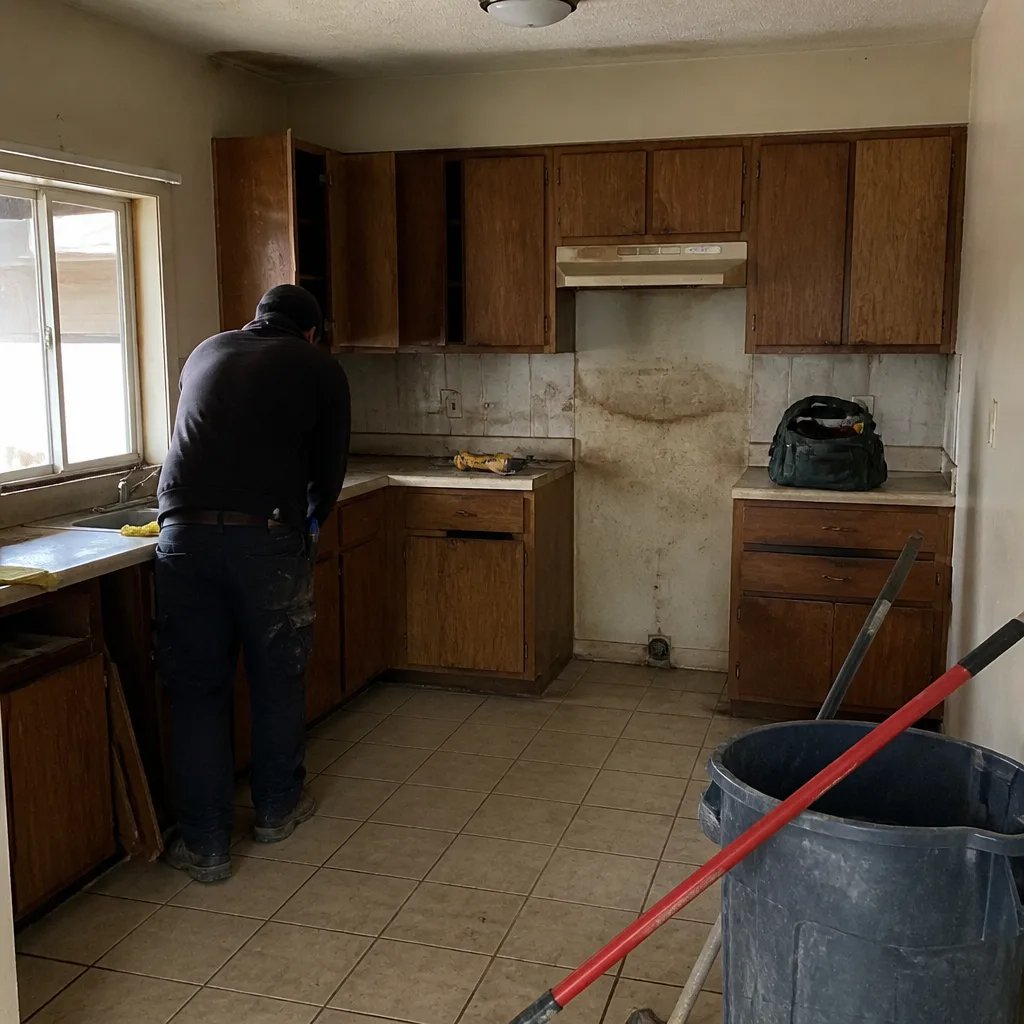 Before
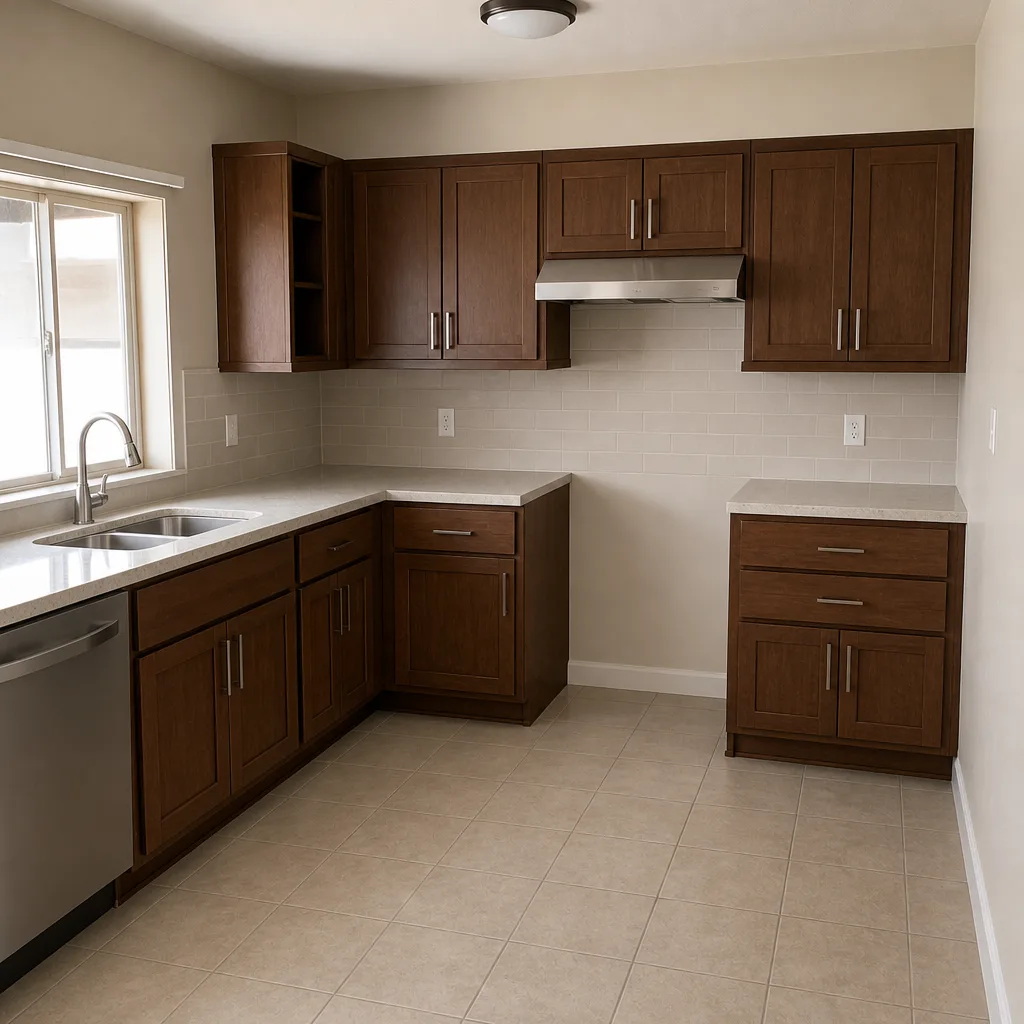 After
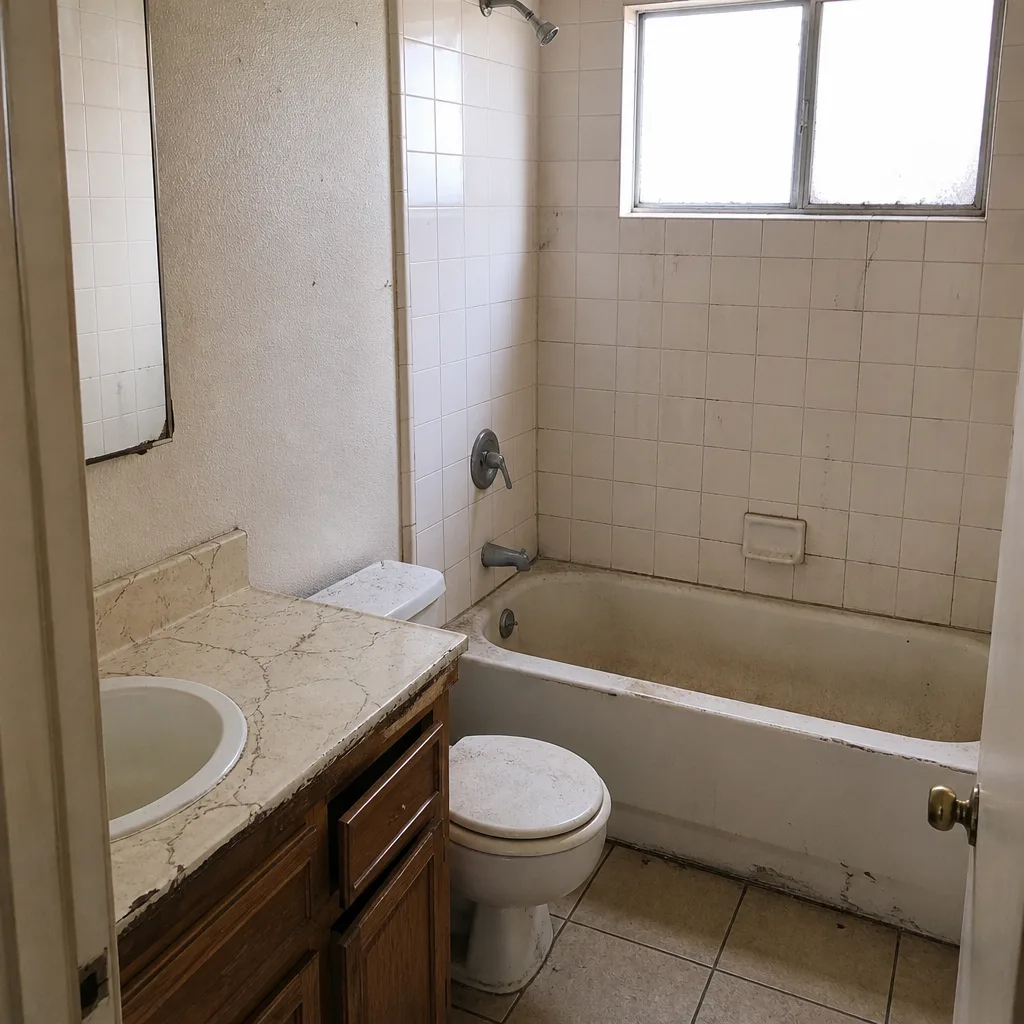 Before
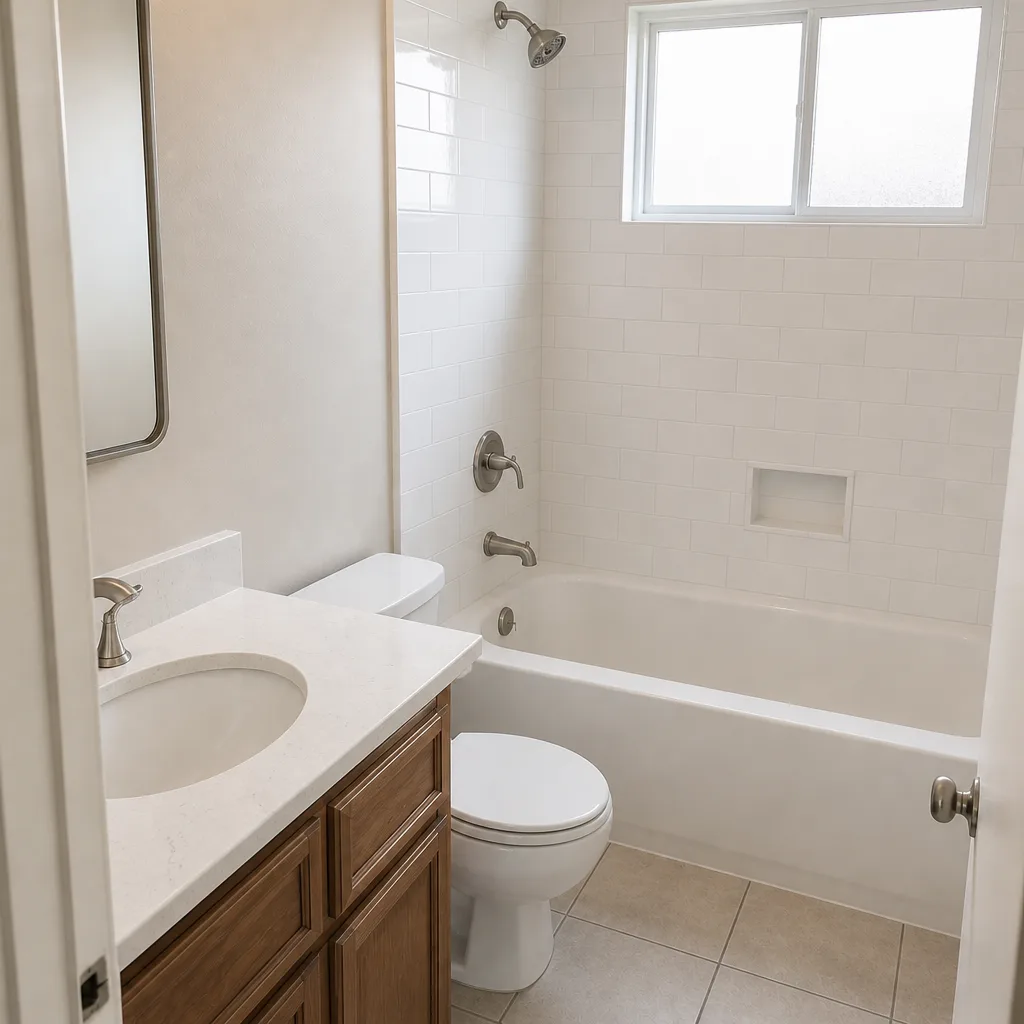 After
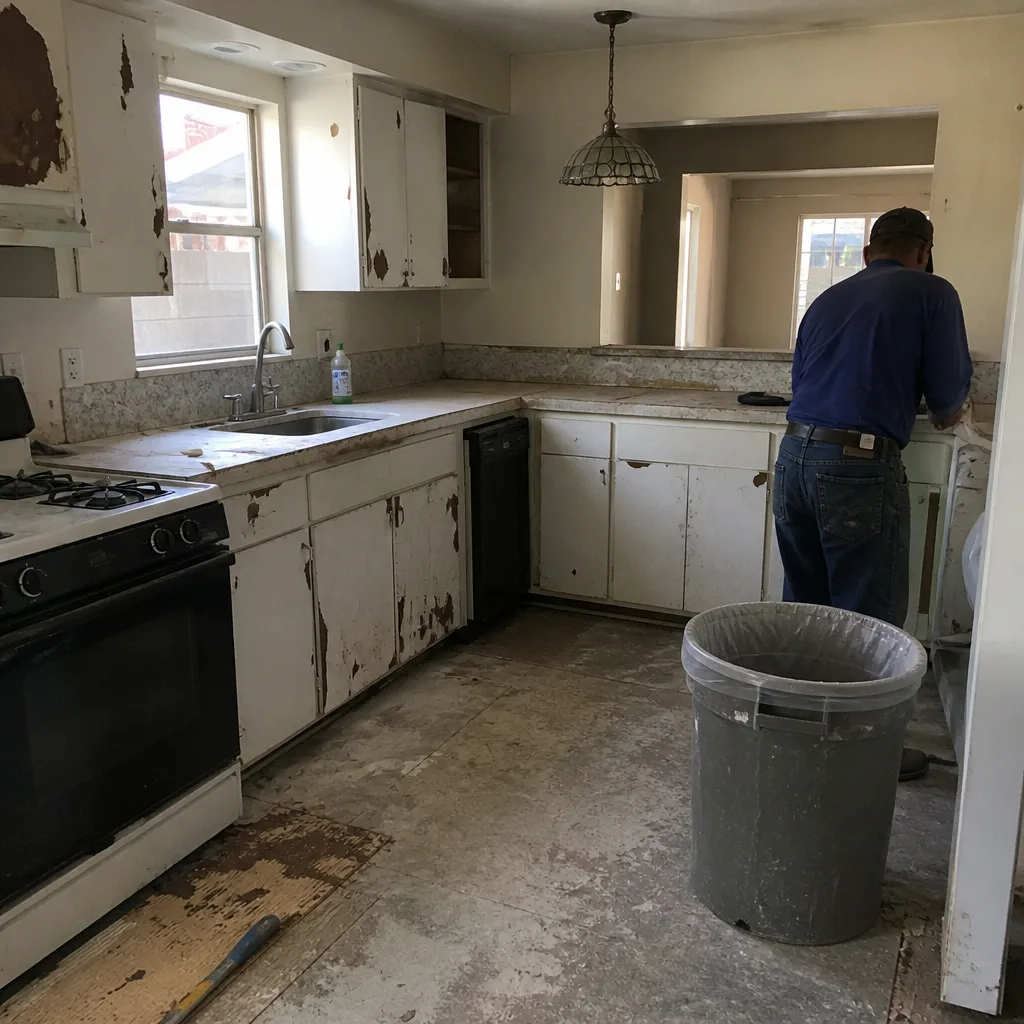 Before
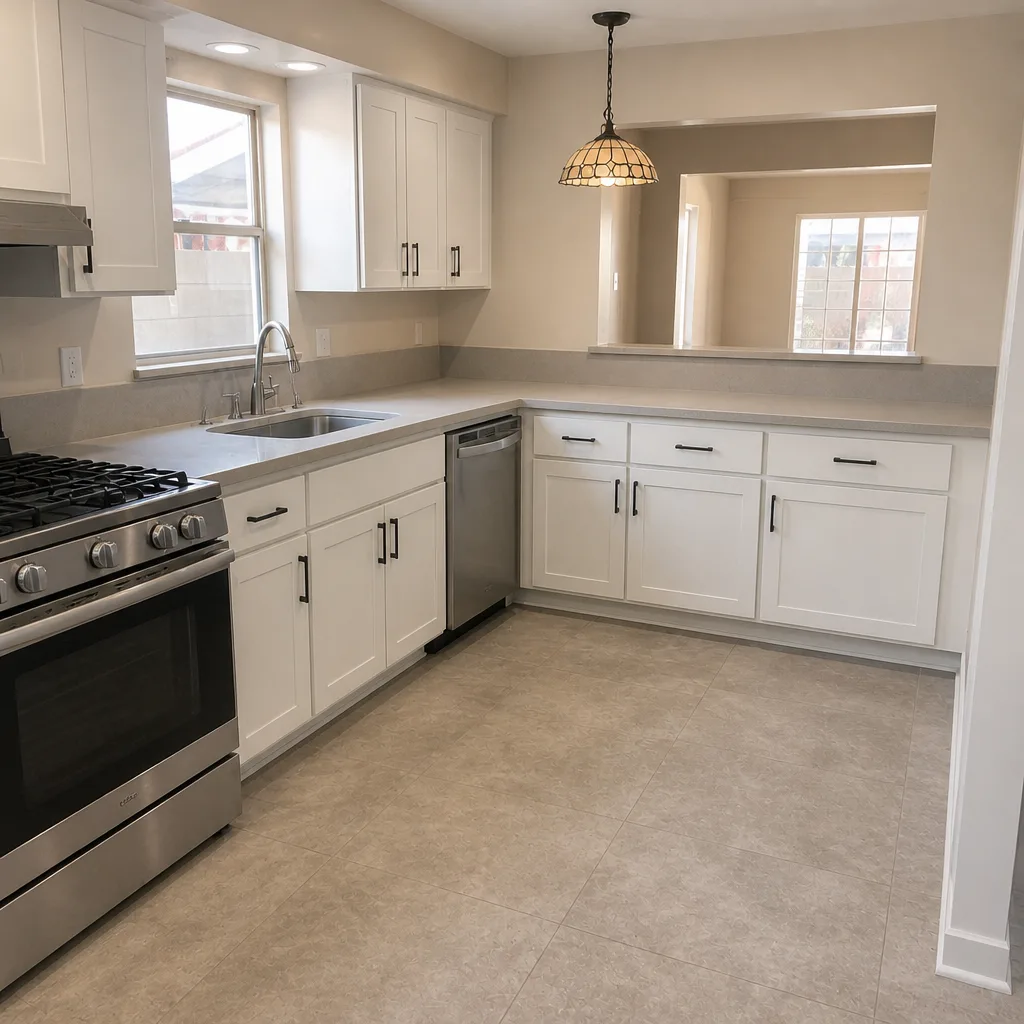 After
When to Call a Professional
Call a professional when the issue is structural, when it opens a wall or a waterproofing layer, or when the pattern worries you. Specific cases: a cluster of new drywall cracks after a wet winter, a door or window that’s changed fit over a season, water pooling at the foundation or visible settlement at hardscape edges, a roof or flashing concern you can’t inspect safely, any electrical or gas work, and any repair you can’t do without opening a finished surface. Penhallow Remodeling Sunrise Manor offers free estimates in Sunrise Manor, with a written price before any work starts and a 365-Day Done Right Promise on every project. Call (844) 972-4834 to schedule your free estimate.
Frequently Asked Questions

Re-seal caulk joints at the 12-month mark, then inspect and re-seal every 12 months after. In Sunrise Manor, the dry air and intense UV shorten that window, so plan on an inspection every 9 months and a full re-seal at least once a year. Most paint and window warranties require it, so the task also protects your coverage.
Yes, noticeably. Low humidity shrinks caulk and wood trim faster, and UV exposure on south- and west-facing walls breaks down paint and sealant sooner than the national timelines assume. In practice, exterior maintenance runs on a 9-month cycle in Sunrise Manor rather than the 12- to 18-month cycle most guides recommend.
It can. Most window warranties require annual inspection and re-sealing of perimeter caulk, and roof warranties generally require annual flashing and debris checks. If a failure traces back to skipped maintenance, the manufacturer can deny the claim, which is why a dated maintenance log is worth keeping.
Add the completion date of each task, the product used, and a photo of the completed work. File the manufacturer warranty with it. Keep the log in a shared digital folder and set a phone reminder for each task, and it becomes a real record at claim time and at sale time.
Watch for a pattern rather than a single sign: new drywall cracks around doorframes after a wet winter, doors and windows that fit differently than they did a year ago, and pooling water or overspray near the foundation. Nevada’s clay soils expand and shrink with moisture, so the annual check is the best early warning you’ll get.
Routine tasks like filter changes, grout resealing, and caulk checks are well within reach for most homeowners. Hand off anything structural, anything electrical or gas-related, roof and flashing inspection if you’re not comfortable on a ladder, and any repair that opens a waterproofing membrane. Call (844) 972-4834 for a free estimate if you’re unsure.
The Bottom Line
A finished remodel isn’t set-and-forget. It has a maintenance calendar, and the calendar is short: caulk and grout in the first year, exterior seals at 9 to 12 months, HVAC filters at 1 to 3, and a foundation and drainage check every spring. In Sunrise Manor, the dry air and UV sun load push the exterior cycle faster than the national timelines, so the 9-month inspection matters more here than a generic guide would suggest. Keep a dated log, know which tasks your warranties require, and call for anything structural. Do that and the work lasts, the warranties hold, and the value of the remodel stays with the house. Call (844) 972-4834 for a free estimate.
Written by the team at Penhallow Remodeling Sunrise Manor.