
Last updated November 17, 2026








Free written scope consultation - allowances, timeline, and change-order rules on paper before a single trade is scheduled
General Contractor Troubleshooting: Common Problems and How to Fix Them
The most expensive word in a remodeling contract is “allowance.” It looks harmless on the page – a placeholder number for tile, lighting, or a vanity – and it almost always comes in lower than the real cost. When the actual selection lands $3,400 over the allowance, the homeowner feels ambushed and the contractor feels blamed, and nobody wrote down who was supposed to warn whom. That single gap starts more fights than bad carpentry ever will. This guide walks through the problems that actually pop up mid-project in Sunrise Manor and gives you a plain playbook for each one: what to document, what to say, and which lever to pull.
Quick Answer
When a remodeling project goes sideways, fix it by getting everything in writing and following a documented sequence: send written notice of the problem, give a defined response window, keep dated photos and notes, and only escalate to the Nevada State Contractors Board after that paper trail exists. Most issues – delays, change-order disputes, punch lists, defective work – are resolved fastest when the homeowner knows what “substantial completion” means, what their guarantee actually covers, and which complaints are workmanship (the contractor’s) versus materials (the manufacturer’s).
Styles & brands we work with
- Kitchen remodeling
- Bathroom remodeling
- Home additions & ADU
- Roofing
- Windows & doors
- Driveway & pavers
- Fence
Table of Contents
- Why the Allowance Line Causes Most Disputes
- What to Do When Your Contractor Goes Quiet Mid-Project
- How to Read a Change Order Before You Sign It
- What “Substantial Completion” Means in Nevada
- How to Document Defective Work So Your Complaint Holds
- Workmanship vs. Materials: Which Complaint Do You Have?
- The Right Order to Escalate a Problem
- How to Prevent Mid-Project Problems Before They Start
Why the Allowance Line Causes Most Disputes
An allowance is a placeholder number in your contract for something you haven’t picked yet – a tile, a countertop, a faucet. The contractor writes in a conservative estimate and you sign it. Then you walk into a showroom, fall for a Cambria quartz counter instead of the entry-level laminate the allowance assumed, and the price moves. That movement is normal. What isn’t normal is discovering it at the end of the job instead of before demo day.
The fix is to treat every allowance as a question, not a promise. Before you sign anything, ask one direct question for each allowance line: “What brand and grade does this number actually buy?” If the answer is fuzzy, the number is fuzzy too. In Sunrise Manor, where a lot of housing stock runs from the 1970s through the 2000s, we see allowances trip people up most on countertops and cabinet fronts, because the gap between a stock line and a semi-custom line is wider than homeowners expect.
- Get the allowance spelled out by name. “Tile allowance: $1,800” is weak. “Tile allowance: $1,800, based on Daltile 12×24 porcelain” tells you exactly where you stand.
- Ask what happens at the overage. A written rule – “homeowner approves any selection over allowance in writing before ordering” – kills the surprise.
- Budget a cushion. Set aside 10-15% of the allowance total for upgrades you’ll inevitably want once you see the samples.
The best protection is a written price before work starts, with allowances itemized rather than buried. When you’re planning a kitchen remodeling in Sunrise Manor, ask for that line-item breakdown up front and hold the contractor to it.
What to Do When Your Contractor Goes Quiet Mid-Project
Silence is the problem homeowners fear most, and it’s the one with the clearest protocol. A few days of quiet during a materials delay is normal. Two weeks with no crew, no call, and no answer is a pattern, and you need to start a written record. The sequence below is what actually protects you.
- Send written notice. Email or text (email is better – it’s timestamped and easy to forward) stating the date, what work has stalled, and a specific response deadline, typically five business days. Keep it factual, not emotional. “As of March 3, no crew has been on site since February 18. Please confirm the resumption date in writing by March 10.”
- Keep a dated log. Every call, every text, every site visit – date, time, what was said. A simple notebook works. This log is what makes your complaint credible later.
- Check the contract’s notice clause. Most contracts spell out how disputes get raised. Follow that method, not just whatever feels natural.
- Escalate in writing, then to the board. If the deadline passes with no response, send a second notice stating you’re prepared to contact the Nevada State Contractors Board. That board licenses contractors in this state and takes complaints about abandonment and non-performance seriously.
The key is that every step is in writing and dated. A phone call you can’t prove happened doesn’t help you. This is also why a live person answering the phone matters – when we say a real person picks up 24/7, it’s because going quiet is the failure mode homeowners remember longest.
How to Read a Change Order Before You Sign It
A change order is a written amendment to your contract – it adds, removes, or re-prices work. It is not inherently bad. A legitimate one reflects something that genuinely changed: you added a window, you moved a wall, or the contractor opened a floor and found rot that no one could see. An inflated one repackages work that should’ve been in the original scope and charges you twice.
To tell the difference, read the change order for two things: a written reason and a written price. If it has both, it’s probably legitimate. If it says “additional labor – $2,200” with no explanation of what work or why, push back.
- Legitimate scope creep: You asked for a second electrical outlet, or added a half-wall. The change order names the new work and prices it against the original.
- Legitimate discovery: Demo revealed a cracked drain line or missing subfloor. The change order should include a photo of what was found and a line-item price for the fix.
- Inflated add-on: A charge for “extra prep” or “unforeseen conditions” with no photos and no itemization. Ask for the breakdown in writing before signing.
You always have the right to ask for a revised change order with more detail. A contractor who won’t provide it is telling you something. Every Penhallow project runs on a written price before work starts so the number you agreed to doesn’t drift – and if a change order is genuinely needed, you’ll see the reason and the price side by side.
What “Substantial Completion” Means in Nevada
Substantial completion is the point at which the work is complete enough that the owner can use the space for its intended purpose – a kitchen you can cook in, a bathroom you can shower in – with only minor items left on a punch list. It’s not “perfectly finished.” It’s “finished enough to function.” That distinction matters because substantial completion is usually the trigger for the final payment, and it’s where homeowners and contractors most often disagree.
In Nevada, as in most states, the concept carries real weight: it starts the clock on certain warranty periods and on the homeowner’s right to make a claim for defective work. Withholding final payment over punch-list items is a real lever, but it has limits. You can typically hold back a reasonable amount tied to the unfinished items – flooring touch-ups, a missing outlet cover, a cabinet door that needs adjusting – but you can’t withhold the whole final payment over a few cosmetic items and expect to stay in the right.
A clean approach: before final payment, walk the project with the contractor, agree in writing on every punch-list item with a date for completion, and release payment once the list is closed. On our jobs, the punch list is part of the 365-Day Done Right Promise – the guarantee isn’t just for the big stuff; if something on the finished list fails within the year, we come back and fix it at no charge. That’s how the general contractor in Sunrise Manor approach handles the close-out – in writing, on a checklist, with a real date on it.
How to Document Defective Work So Your Complaint Holds
Photos alone rarely win a dispute. What wins is a dated, described, consistent record that shows a problem existed, persisted, and was reported. If your complaint ever reaches the Nevada State Contractors Board or a small-claims court, the person reviewing it will want to see the same defect from several angles over time – not one blurry shot from a single afternoon.
- Take photos with context. One wide shot showing the room and the location, one close shot showing the defect. Include a reference object (a tape measure, a coin) so scale is obvious.
- Write a plain description. “Grout cracked along shower floor tile line, roughly 36 inches long, first noticed March 12, photo timestamp 3:14 p.m.” That sentence is worth ten pictures.
- Note the date and time on everything. Most phones embed this automatically. Don’t crop it out.
- Report it in writing immediately. Send the description and photos to the contractor the same week you notice the problem – waiting undermines your case.
- Keep everything in one folder. Photos, emails, your log, the contract, the change orders. One place, because when you need it, you need it fast.
In Sunrise Manor, where the dry climate swings hard between hot afternoons and cool nights, we see grout and caulk hairline cracks appear in tile and around fixtures during the first summer. That’s often normal settling, not defective work – which is exactly why the photo record matters, so you can tell the difference between a cosmetic hairline and an actual failure.
Workmanship vs. Materials: Which Complaint Do You Have?
Knowing which complaint you have tells you who has to fix it. A workmanship complaint is about how something was installed – the tile was set unevenly, the cabinet doors don’t align, the caulk line is sloppy. That’s the contractor’s responsibility, and it’s covered by most contractor guarantees. A materials complaint is about the product itself failing – the cabinet finish peels, the faucet cartridge drips, the quartz counter chips. That’s often the manufacturer’s problem, and the fix runs through their warranty, not the installer’s toolbox.
Here’s how to tell them apart quickly:
- Workmanship: The problem shows up along seams, joints, corners, or edges where installation happens. It’s visible immediately or within weeks. It’s consistent – the same issue repeats in the same way.
- Materials: The problem shows up in the body of the product, not at the joint. The finish blisters, the metal pits, the seal fails. The same product fails the same way in every instance, regardless of installer.
- Overlap: Sometimes it’s both – a failed seal under a faucet can be the product’s fault or the installer’s. Name the symptom, not the cause, when you report it, and let the contractor diagnose.
This is where the brand names on a well-run job matter. When we install a Kohler faucet or Caesarstone or Silestone counters, the product carries its own manufacturer warranty, and our workmanship carries ours – two layers of protection instead of one. A contractor who names the products and the guarantee in writing gives you a real place to go when something fails.
The Right Order to Escalate a Problem
Escalation works best when it goes in order. Skipping a step – calling the board before you’ve sent written notice, for example – can actually slow you down, because the board will ask what you did first. Follow this sequence and you’ll have every box checked.
- Raise it with the contractor in writing. State the issue, attach photos, and set a response deadline. One clear email is worth a dozen frustrated phone calls.
- Give a defined window to respond. Five to ten business days is reasonable. Note the date in your log.
- Send a second written notice. Restate the problem, note that the deadline passed, and say plainly you’re preparing to escalate.
- Pull your documentation together. Contract, change orders, photos, emails, your log. This is the file you’ll need.
- Contact the Nevada State Contractors Board. The board handles complaints about licensed contractors, including abandonment and non-performance. Filing requires a written complaint – which is exactly why the paper trail matters.
If the complaint is over money rather than performance – like a final payment dispute – small-claims court may be faster. Either way, the timeline above gets you there with a record that holds up.
How to Prevent Mid-Project Problems Before They Start
The best troubleshooting happens before the problem exists. In our experience, nearly every mid-project dispute we hear about from homeowners traces back to a contract that was too vague on day one. Here’s what a solid contract should contain – and if yours doesn’t have these, ask for a revision before you sign.
- A written price, not a range. Every line itemized, every allowance named with a brand and grade.
- A start date and a real arrival window. “Sometime in June” is not a schedule.
- A written guarantee of the work. What it covers, how long it lasts, and exactly what happens if something fails.
- A clean-site clause. Daily cleanup, where debris goes, and who handles it.
- A change-order procedure. How changes get priced and approved, in writing.
- A dispute procedure. The written method to raise a complaint, with a response window.
This is what The Kingswell Way amounts to in practice: say the price before the work, show up in the window we gave, leave the place cleaner than we found it. Every penhallow project carries a written guarantee with a 365-Day Done Right Promise, and a free return visit if a repair fails – no service call fee, no re-inspection charge. That’s the difference between a promise and a piece of paper you can hold someone to. If you’re planning a bathroom remodeling in Sunrise Manor, ask for that paper up front.
Common Mistakes to Avoid
- Signing a contract with vague allowances. “Tile: $2,000” with no brand or grade named means the fight is already scheduled. Get the product named in writing before you sign.
- Not putting problems in writing. A phone call you can’t prove happened is useless later. Always follow a verbal complaint with an email or text that states the date and the issue.
- Withholding the full final payment over small punch-list items. In Sunrise Manor, holding back a reasonable amount tied to the unfinished work is fair; withholding the whole payment can put you in the wrong.
- Assuming every product failure is the installer’s fault. Check the manufacturer warranty first – a failed faucet cartridge is often Kohler’s problem, not the plumber’s.
- Skipping the written notice before calling the contractors board. The board will ask what you did first. Have the paper trail before you file.
- Choosing the lowest bid without asking about the guarantee. A cheap price with no written warranty and no real arrival window is the most expensive bid on the table.
- Letting a small defect wait six weeks before reporting it. In a hot, dry climate like Sunrise Manor’s, a hairline crack can become a leak. Report what you see promptly and keep the photos.
See the difference
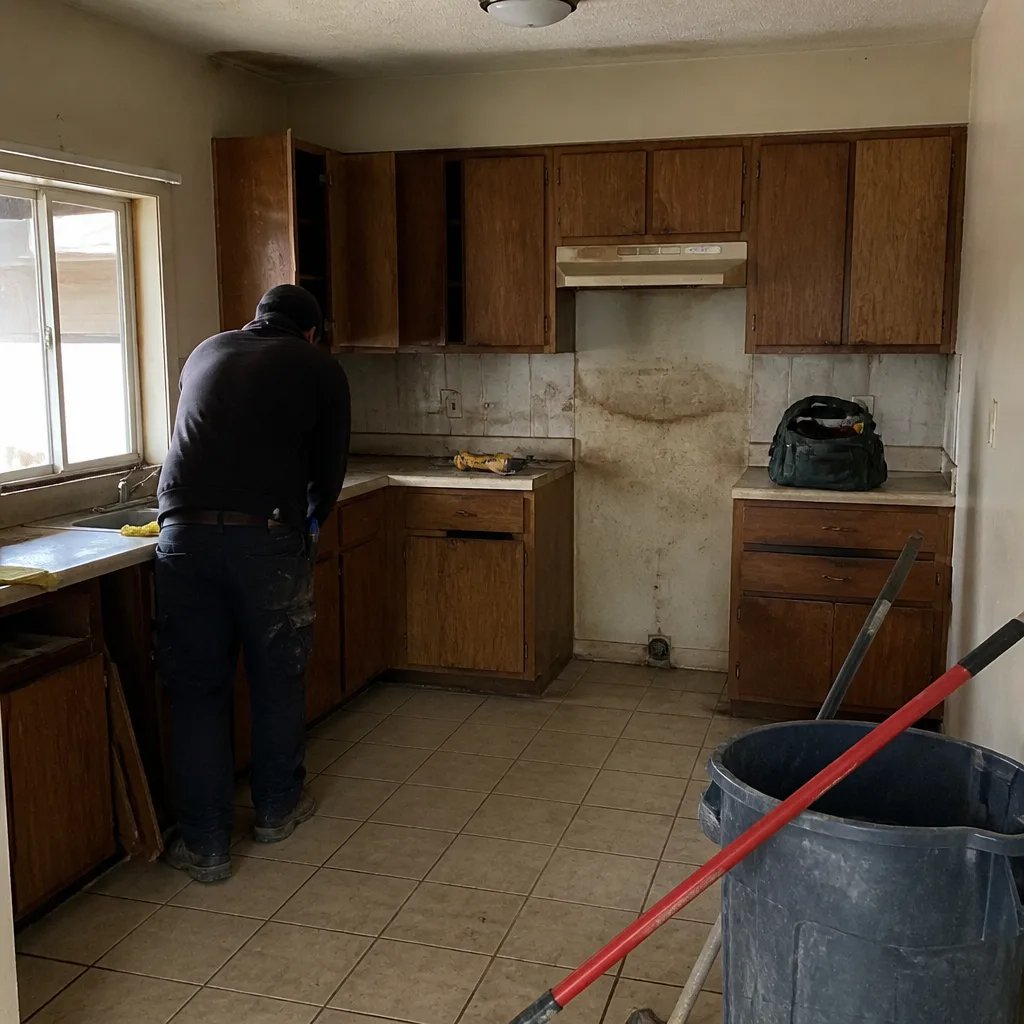 Before
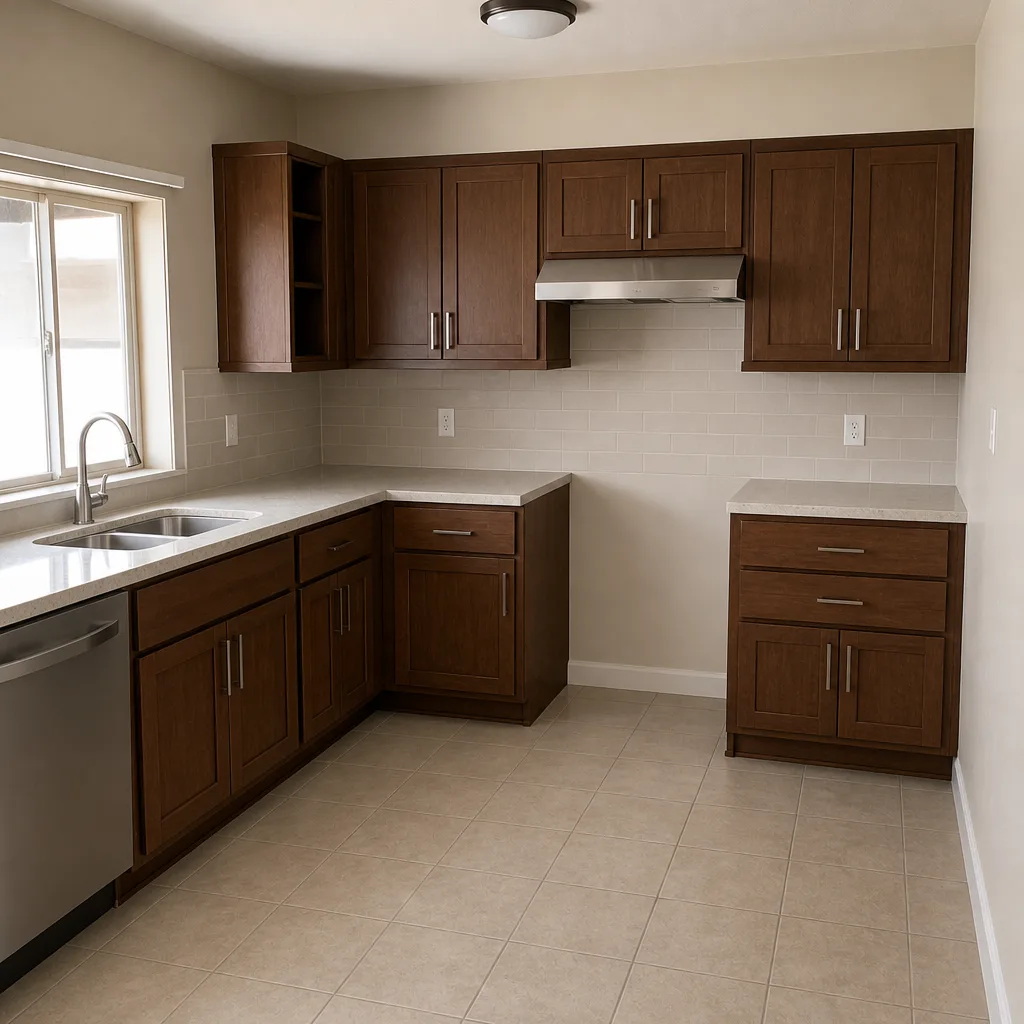 After
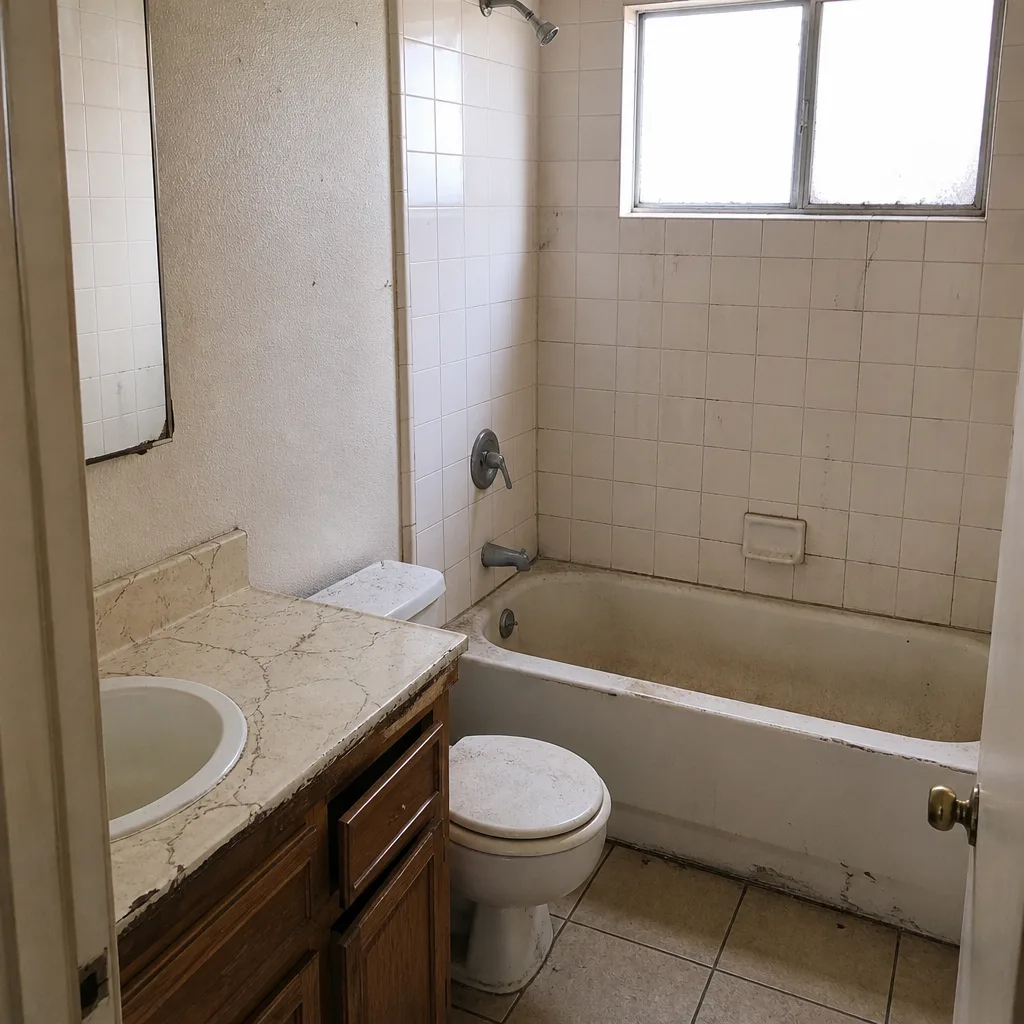 Before
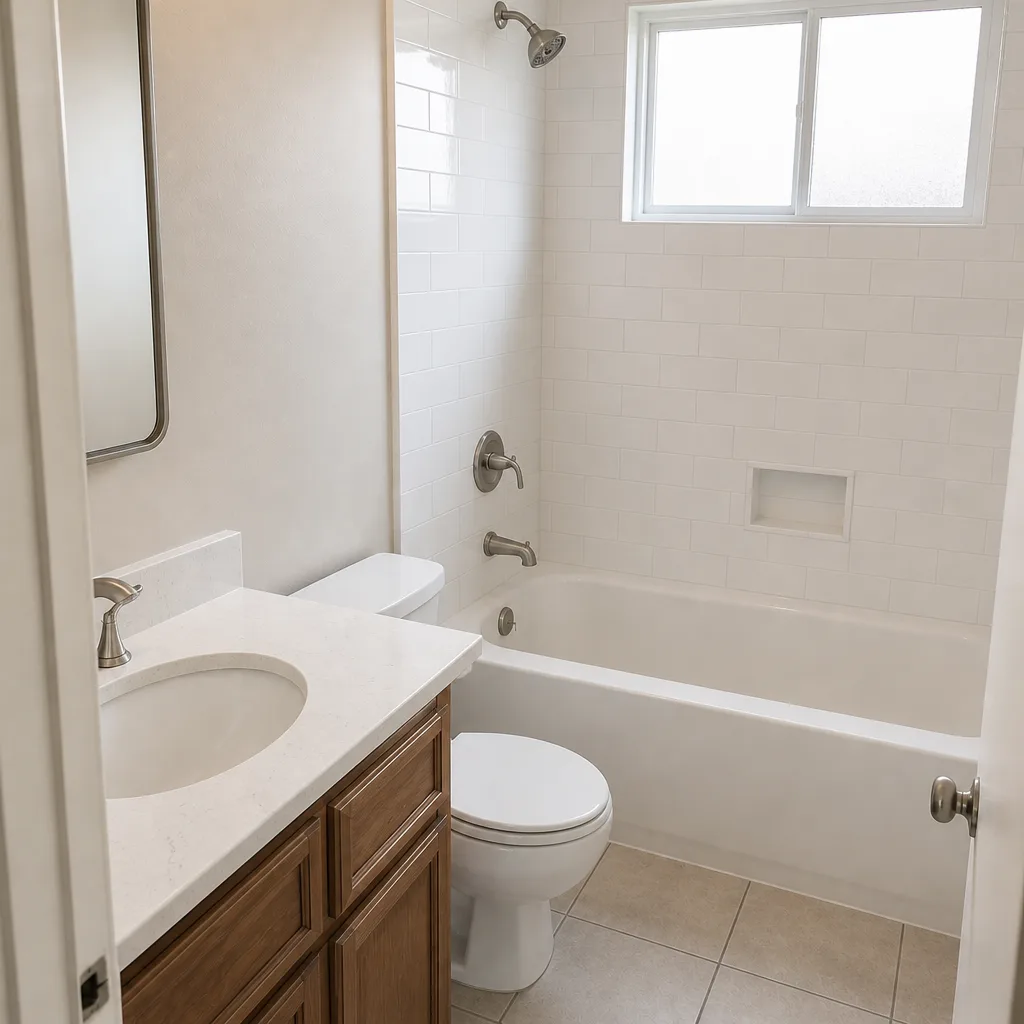 After
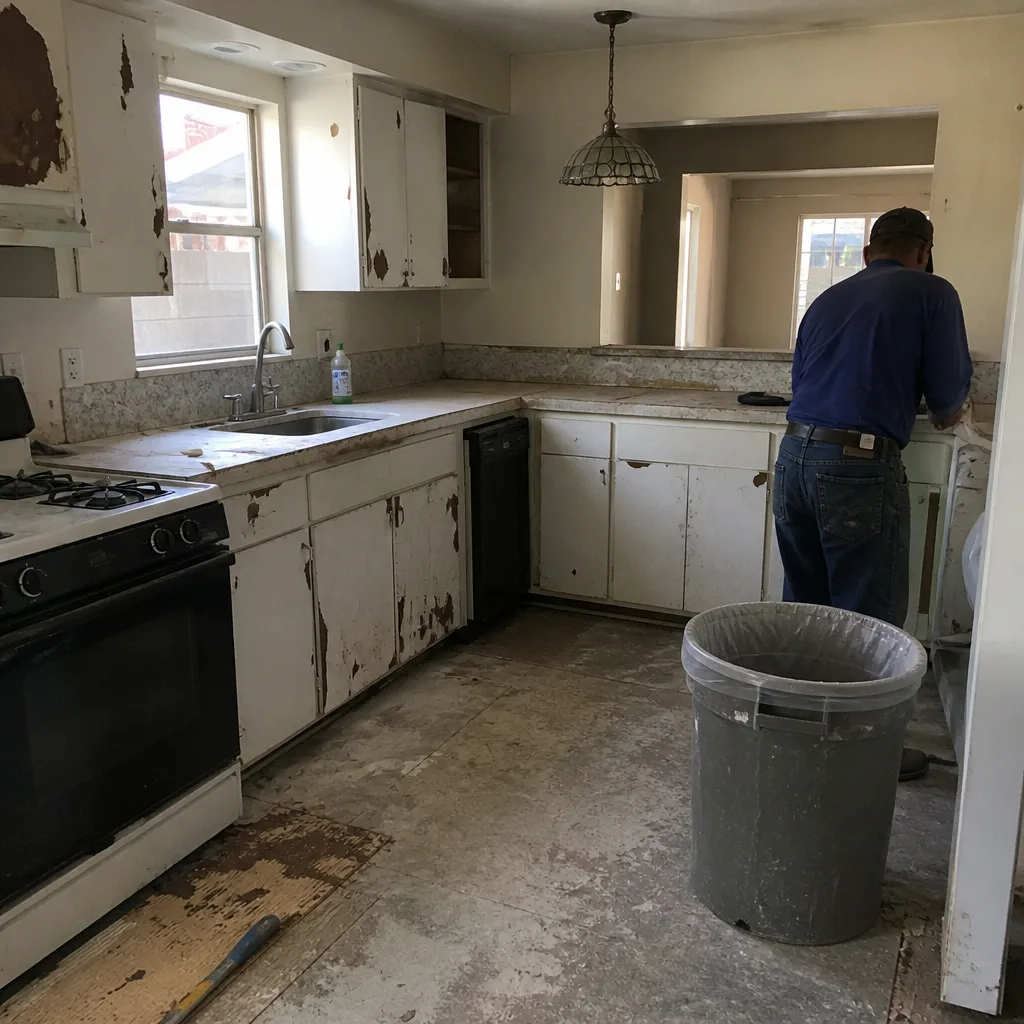 Before
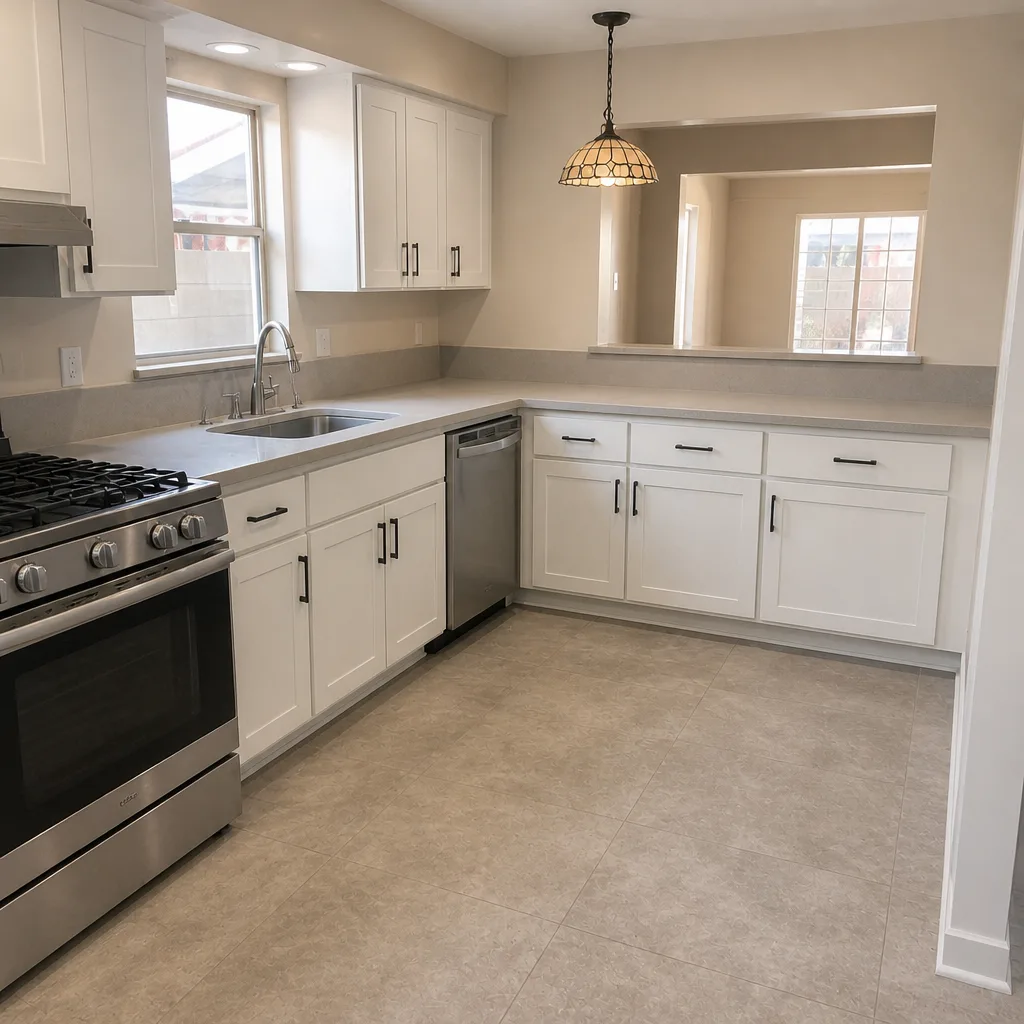 After
When to Call a Professional
Some problems you can manage with a phone call and a written email. Others need a contractor on site before anything else happens. Call a professional when the work involves water, gas, electrical, or structure – a leaking shower pan, a gas line, a wall opening that wasn’t approved, a floor that’s moving where it shouldn’t. Also call when a “small” fix you’ve traced hasn’t held after two attempts, or when the project has stalled with no written schedule. Penhallow Remodeling Sunrise Manor offers free estimates in Sunrise Manor – call (844) 972-4834 to have a background-checked technician walk the job with you and put a written price in front of you before anything begins. You’ll get a real arrival window and a live person on the other end of the phone, not a callback window.
Frequently Asked Questions

Send a written notice – by email or text – that states the date work stalled, names the outstanding work, and asks for a written response within five business days. Keep a dated log of every contact from that point. If the deadline passes with no response, send a second notice stating you’re preparing to contact the Nevada State Contractors Board. Call (844) 972-4834 if you’d like a free second opinion on where your project stands.
The cost depends entirely on what failed, but here’s the range homeowners should budget for: a punch-list close-out (touch-ups, adjustments) usually runs $200-$800; re-grouting or re-caulking a shower runs $300-$900; re-setting a section of tile runs $600-$1,800; and resolving a stalled or abandoned project through a new contractor can run tens of thousands on a kitchen or bathroom. Call (844) 972-4834 for a written price on your specific job – estimates are free.
It shouldn’t – not for scope you agreed to in writing. A legitimate change order reflects an actual change: you added something, or demo revealed a hidden problem with photos to prove it. An inflated add-on repackages original work at a new price. Ask for a written reason and a line-item breakdown before you sign any change order. Call (844) 972-4834 to get a free written estimate with every allowance itemized up front.
Look at where the failure appears. Workmanship problems show up at seams, joints, edges, and corners where installation happens. Materials problems show up in the body of the product – peeling finish, pitting metal, a failed seal – regardless of installer. Report the symptom, not the cause, and let the contractor diagnose. Your guarantee covers the labor; the manufacturer covers the product. Call (844) 972-4834 for a free walk-through if you’re not sure which you have.
No – most disputes resolve before that step. The board is a formal escalation you use after written notice has gone unanswered. Give the contractor a defined window to respond, keep your photo and email record, and file the board complaint only if that fails. A written record is what makes any complaint, at any stage, hold up. Call (844) 972-4834 for a free estimate if you’re starting over on a stalled project.
Get everything in writing before work starts: a written price with allowances itemized by brand and grade, a real arrival window, and a written guarantee that spells out what happens if something fails. A clear contract prevents most of the disputes in this guide. You can see the Penhallow Remodeling Sunrise Manor home page for what that looks like in practice, or call (844) 972-4834 to schedule your free estimate.
The Bottom Line
Most remodeling disputes start as a written gap, not a shoddy install. The fix is paper and sequence: name your allowances, get a written price before work starts, log every problem with a date and a photo, know what substantial completion means before you withhold a final payment, and escalate in order – written notice first, the Nevada State Contractors Board only after the window passes. Tell your workmanship complaint from your materials complaint so you go to the right party. In Sunrise Manor’s hot, dry climate, document hairline cracks early before they become leaks. Our technicians have up to 22 years of experience, and every project carries a written guarantee with a 365-Day Done Right Promise and a free return visit if anything fails.
If your project has stalled or you’d like a second set of eyes on a contract before you sign, Penhallow Remodeling Sunrise Manor would be glad to help. Call (844) 972-4834 for a free estimate – a real person answers 24/7, you’ll get a written price before any work begins, and a background-checked, uniformed technician arrives in the window we give you. We install products from recognized brands like Cambria, Silestone, and Caesarstone alongside the manufacturer warranties, so the guarantee behind your remodel has more than one layer holding it up.
Written by the team at Penhallow Remodeling Sunrise Manor.